반응식

[C:1]([C@H:4]([C@@H:6]([C:8]([O-:10])=[O:9])[OH:7])[OH:5])([O-:3])=[O:2].C([C@H]([C@@H](C([O-])=O)O)O)([O-])=O.[Na+].[Na+].C([C@H]([C@@H](C([O-])=O)O)O)([O-])=O.[Ca+2].S(=O)(=O)(O)O>[O-][W]([O-])(=O)=O>[C:8]([OH:10])(=[O:9])[C@H:6]([C@@H:4]([C:1]([OH:3])=[O:2])[OH:5])[OH:7]참가 물질
6



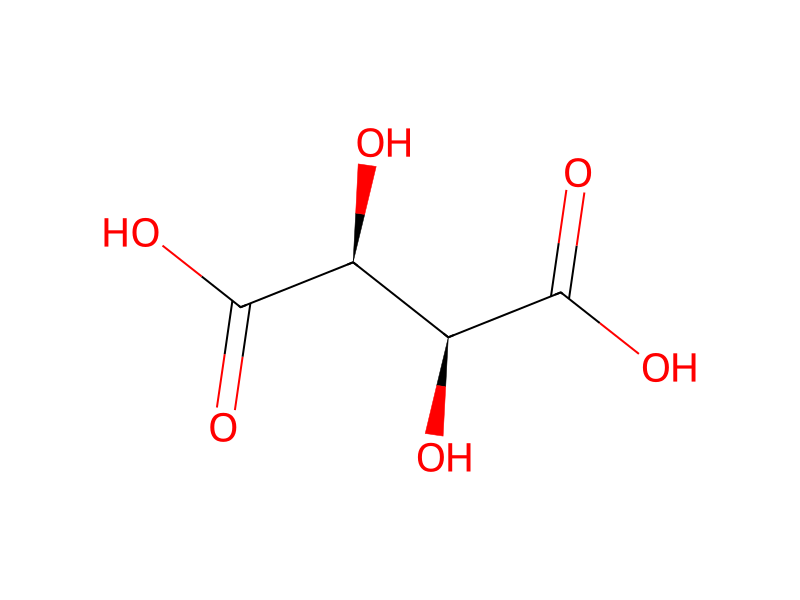

실험 절차
Three samples of disodium cis-epoxysuccinate solution containing different amount of tungstate were separately converted to d-tartrate by treatment with a microbiorganism (FERM-P 2507) which has the ability to convert cis-epoxysuccinate to d-tartrate selectively. Disodium d-tartrate enzymatically prepared was converted to calcium d-tartrate, followed by acid-treatment with sulfuric acid to afford d-tartaric acid. The tungstate contents in the product and the starting material are compared in Table 3.
출처 및 근거
- ORD 기록
- ord-beb21073748a4959ae5ff0eba22457b7
- 출처 데이터셋
- uspto-grants-1977_12
- 특허 번호
- US04065475
연결된 노트
불러오는 중…