반응식

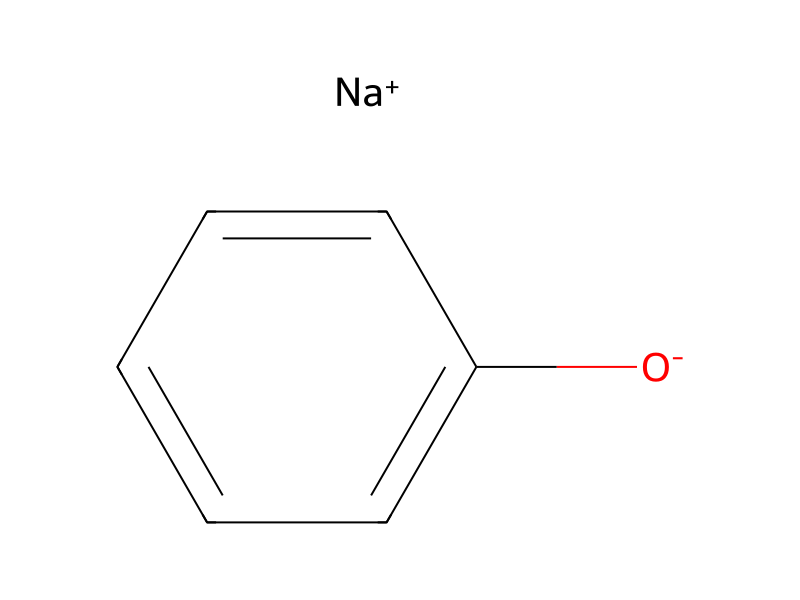
[Cl:1][P:2]1(Cl)[N:7]=[P:6](Cl)([Cl:8])[N:5]=[P:4]([Cl:11])(Cl)[N:3]=1.[O-:13][C:14]1[CH:19]=[CH:18][CH:17]=[CH:16][CH:15]=1.[Na+]>>[Cl:1][P:2]1([O:13][C:14]2[CH:19]=[CH:18][CH:17]=[CH:16][CH:15]=2)[N:7]=[P:6]([Cl:8])([O:13][C:14]2[CH:19]=[CH:18][CH:17]=[CH:16][CH:15]=2)[N:5]=[P:4]([Cl:11])([O:13][C:14]2[CH:19]=[CH:18][CH:17]=[CH:16][CH:15]=2)[N:3]=1참가 물질
3


실험 절차
Examples 8 to 12 below illustrate embodiments of the invention in which hexachlorocyclotriphosphazene (compound 1) is reacted first with sodium phenoxide to produce an intermediate (trischlorotrisphenoxycyclotriphosphazene), 19 which is then reacted without separation with sodium 4-nitrophenoxide to afford tris(4-nitrophenoxy)tris(phenoxy)cyclotriphosphazene 20. The nitro groups of 20 are reduced to afford the corresponding tris amino compound 21 which is then used according to Scheme I or Scheme II shown in FIG. 2 and FIG. 3, respectively.
출처 및 근거
- ORD 기록
- ord-142809559af4447d878cb8abbe1f5e41
- 출처 데이터셋
- uspto-grants-1985_10
- 특허 번호
- US04550177
연결된 노트
불러오는 중…