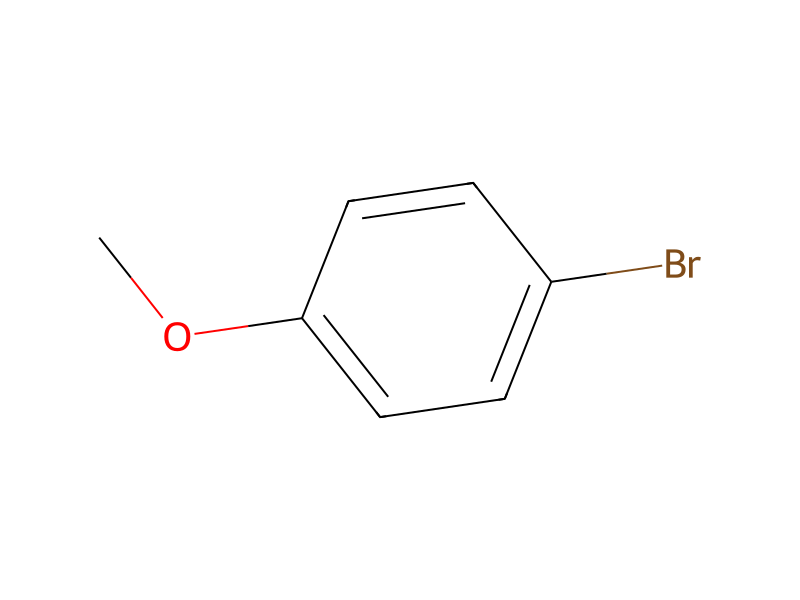
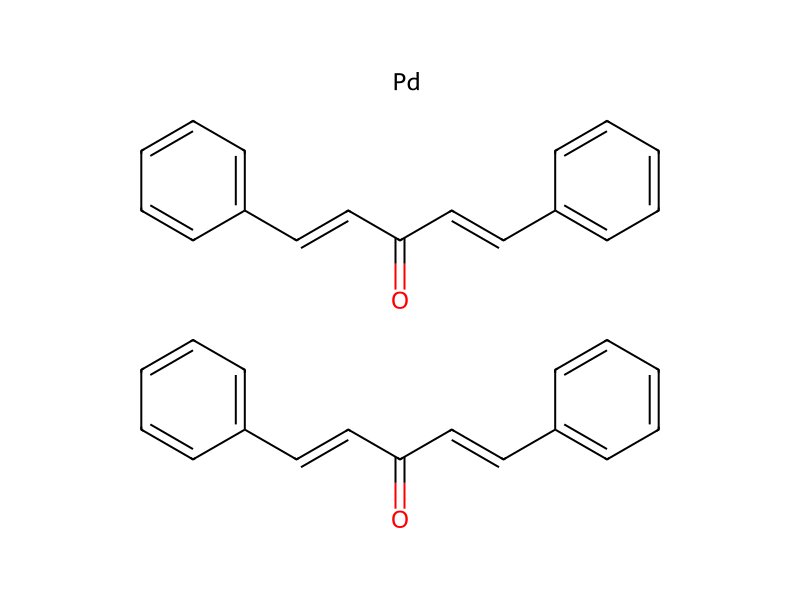
23.30 g of thiophene (0.277 mole) and 140 ml of dry THF were introduced into a 500 ml three-necked round bottom flask placed under nitrogen; after cooling to -20° C., 160 ml of butyllithium (46 M/1 in hexane) were run in slowly; the temperature was allowed to return to 0° C.; time 2 hours 30 min. 34.6 g (0.254 M) of ZnCl2 and 275 ml of dry THF were charged under nitrogen into a one-liter three-necked vessel with mechanical stirring. After allowing to dissolve, the above solution was run in over 30 min; the reaction was slightly exothermic. 20 ml of THF were added again for rinsing. 0.3907 g (6.80 ×10⁻⁴ mole) of Pd(DBA)2, 0.714 g (2.72 ×10³ mole) of TPP and 220 ml of dry THF were charged into a 2 liter three-necked vessel placed under nitrogen; after allowing to react (10 min), 45.9 g (0.245 mole) of para-bromoanisole were added and the above solution was run in at normal temperature; heating under reflux was carried out for 16 hours. After allowing to cool, water was added and the mixture was extracted with ethyl acetate; the material was washed with water, dried over MgSO4 and was evaporated down; a solid was recovered. 27.3 g of a solid were obtained by recrystallization (melting point: 111° C.) (2-paramethoxyphenylthiophene).