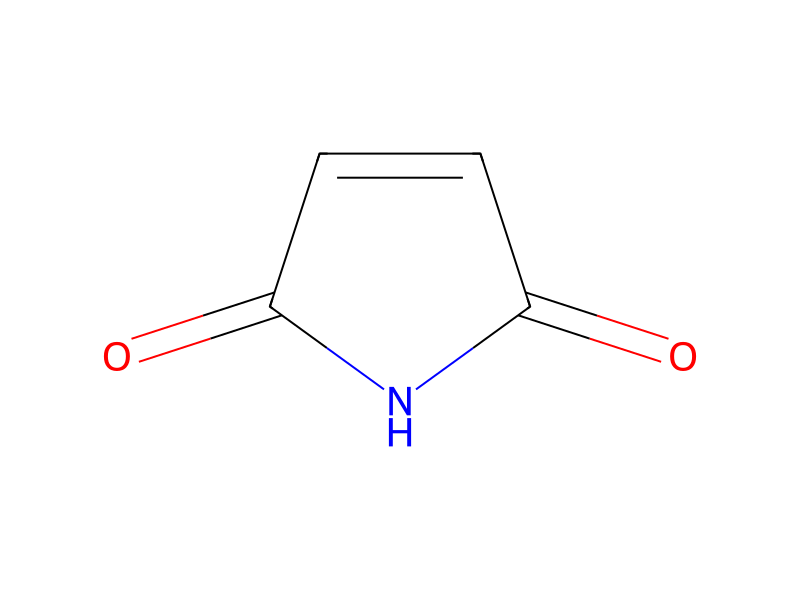
In the case of maleinimide or N-hydroxysuccinimide derivatives of the cis-configured platinum(II)-complexes, the synthesis occurs in detail through the reaction of the corresponding amino compounds H2N—CH2CH2—NH—(CH2)n—X, (H2N—CH2)2CH—(CH2)n—X or H2N—CH2CH(NH2)—(CH2)n—X (general formulas I, II and III), wherein one or two of the primary or secondary amino groups has been protected with a BOC group (reaction with bis-tert.-butyloxy carbonyl anhydride) and X is —NH2 or —OH, with the acids or acid chlorides, listed in Step 1, of maleinimide or N-hydroxysuccinimide compounds of the general formulas V-X in a solvent, preferably THF or ethyl acetate, with the optional addition of a tertiary base, as a rule, Et3N, or with the optional addition of DMAP and a condensation agent, as a rule, DCC or CMC, to yield the corresponding BOC-protected maleinimide or hydroxysuccinimide derivatives which then are converted by means of trifluoroacetic acid or HCl in ether, THF or dioxan through cleavage-off of the BOC group into the corresponding trifluoroacetate or hydrochloride and finally through reaction with a tetrachloro-platinate(II) salt, preferably potassium tetrachloro-platinate(II), in water, salt buffers, DMF, DMF/water mixtures, THF/water mixtures or DMF/methanol mixtures, into the corresponding platinum(II)-complexes, wherein the coupling occurs via the terminal HO group as an ester bond or via the terminal H2N group as an acid amide bond, or through the reaction of the corresponding amino compounds H2N—CH2CH2—NH—(CH2)n—X, (H2N—CH2)2CH—(CH2)n—X or H2N—CH2CH(NH2)—(CH2)n—X (general formulas I, II and III), wherein one or two of the primary or secondary amino groups has been protected with a BOC group (reaction with bis-tert.-butyloxy carbonyl anhydride) and X is —NH2 or —OH, with compounds of the type HOOC—R—COCR* or ClOC—R—COCR* (R is an aliphatic carbon chain with 1-6 carbon atoms or a substituted or unsubstituted phenylene group, and R* is H, phenyl, alkyl with 1-6 carbon atoms) in a solvent, preferably THF or ethyl acetate, with the optional addition of a tertiary base, as a rule, Et3N, or with the optional addition of DMAP and a condensation agent, as a rule, DCC or CMC, to yield the corresponding BOC-protected maleinimide or hydroxysuccinimide derivatives which now have a further carbonyl function which, in the following, are reacted with the amines, acid hydrazides or hydrazines, listed in Step 1, of the maleinimide or N-hydroxysuccinimide compounds in a solvent, preferably DMF, methanol or ethanol, with the addition of acid, as a rule, toluene-p-sulfonic acid or trifluoroacetic acid, to yield the corresponding imine, carboxylhydrazone or hydrazone derivatives, which then again are converted by means of trifluoroacetic acid or HCl in ether, THF or dioxan through cleavage-off of the BOC group into the corresponding trifluoroacetate or hydrochloride and finally through reaction with a tetrachloro-platinate(II) salt, preferably potassium tetrachloro-platinate(II), in water, salt buffers, DMF, DMF/water mixtures, THF/water mixtures or DMF/methanol mixtures, into the corresponding platinum(II)-complexes, or through the reaction of the corresponding amino compounds H2N—CH2CH2—NH—(CH2)n—X, (H2N—CH2)2CH—(CH2)n—X or H2N—CH2CH(NH2)—(CH2)n—X (general formulas I, II and III), wherein one or two of the primary or secondary amino groups has been protected with a BOC group (reaction with bis-tert.-butyloxy carbonyl anhydride) and X is COOH or this carbonyl group was converted using acid halogenation reagents such as thionyl chloride or oxalyl chloride into the acid chloride, with compounds of the type HOR—COCR* or H2N—R—COCR* (R is an aliphatic carbon chain with 1-6 carbon atoms or a substituted or unsubstituted phenylene group, and R* is H, phenyl, alkyl with 1-6 carbon atoms) in a solvent, preferably THF or ethyl acetate, with the optional addition of a tertiary base, as a rule, Et3N, or with the optional addition of DMAP and a condensation agent, as a rule, DCC or CMC, to yield the corresponding BOC-protected maleinimide or hydroxysuccinimide derivatives which now have a further carbonyl function which, in the following, are reacted with the amines, acid hydrazides or hydrazines, listed in Step 1, of the maleinimide or N-hydroxysuccinimide compounds in a solvent, preferably DMF, methanol or ethanol, with the addition of acid, as a rule, toluene-p-sulfonic acid or trifluoroacetic acid, to yield the corresponding imine, carboxylhydrazone or hydrazone derivatives, which then again are converted by means of trifluoroacetic acid or HCl in ether, THF or dioxan through cleavage-off of the BOC group into the corresponding trifluoroacetate or hydrochloride and finally through reaction with a tetrachloro-platinate(II) salt, preferably potassium tetrachloro-platinate(II), in water, salt buffers, DMF, DMF/water mixtures, THF/water mixtures or DMF/methanol mixtures, into the corresponding platinum(II)-complexes.