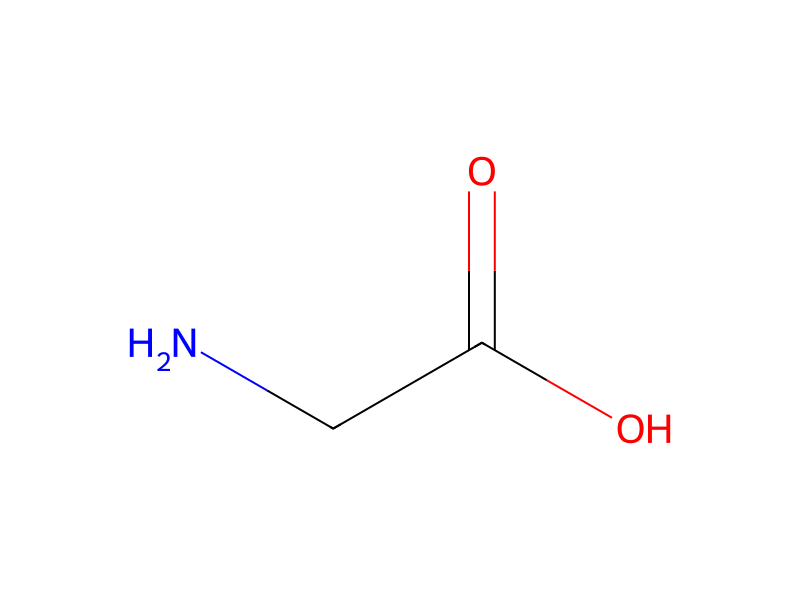
A pressure glass reaction flask which included top threads for a screw cap lid can be fitted with a magnetic stirrer, charged with 5e, glycine (about 3 molar equivalents), methanol, and a sodium methoxide solution (with 1.2 molar eqivalents NaOCH3) and sealed. The reaction can then be heated to 110° C. for at least 6 h during which time the reaction forms a yellow suspension. The reaction can then be cooled to 20-25° C. and evaluated by HPLC. The reaction can be continued until less than 1% 5e remains as determined by HPLC, filtered, washed with methanol, dried under vacuum, dissolved in water and extracted with ethyl acetate to remove impurities to below 0.1%. The ethyl acetate can be removed and an acetic acid solution (with 3 molar eqivalents acetic acid) can be added over one hour. The suspension can be stirred at room temperature for at least 3 hours, filtered, and the solid washed with water (3×), cold acetone (5-10° C., 2×) and evaluated for impurities by HPLC. If acetone removable impurities are present, the flask can be charged with acetone and refluxed for at least 8 h, slowly cooled to 5-10° C., stirred for at least 2-3 h, filtered, washed with cold acetone (5-10° C., 3×) and dried under vacuum to obtain 2-[4-hydroxy-1-methyl-7-(4-methoxy-phenoxy)-isoquinoline-3-carboxamido]acetic acid.