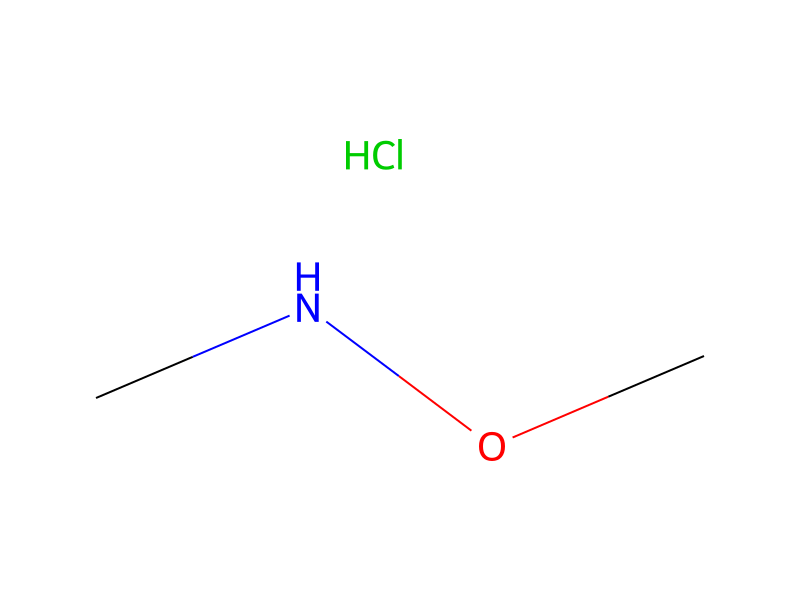
To a solution of 0.784 g of 6-chloroimidazo[1,2-a]pyridine-2-carboxylic acid in 12 mL of dichloromethane are added 1.67 mL of triethylamine, 1.53 g of 1-(3-dimethylaminopropyl)-3-ethylcarbodiimide hydrochloride and 1.08 g of 1-hydroxybenzotriazole. The reaction mixture is stirred for 20 minutes at room temperature. 0.39 g of N,O-dimethylhydroxylamine hydrochloride is added. The reaction mixture is stirred for 4 hours at room temperature. 60 mL of dichloromethane and 30 mL of water are added. After separation of the phases by settling, the organic phase is dried over magnesium sulfate, filtered, evaporated to dryness under reduced pressure, and then purified on a column of silica, eluting with a 95/5 mixture by volume of dichloromethane and methanol. The fractions containing the product are combined and concentrated to dryness under reduced pressure to give 0.6 g of N-methoxy-N-methyl-6-chloroimidazo[1,2-a]pyridine-2-carboxamide in the form of a white solid.