Cyclohexanol → Dicyclohexyl 4,6-dimethylbenzene-1,3-disulfonate
반응식

[CH:1]1([OH:7])[CH2:6][CH2:5][CH2:4][CH2:3][CH2:2]1.[C:8]1([CH3:23])[C:13]([S:14](Cl)(=[O:16])=[O:15])=[CH:12][C:11]([S:18](Cl)(=[O:20])=[O:19])=[C:10]([CH3:22])[CH:9]=1>N1C=CC=CC=1>[C:8]1([CH3:23])[C:13]([S:14]([O:7][CH:1]2[CH2:6][CH2:5][CH2:4][CH2:3][CH2:2]2)(=[O:16])=[O:15])=[CH:12][C:11]([S:18]([O:7][CH:1]2[CH2:6][CH2:5][CH2:4][CH2:3][CH2:2]2)(=[O:20])=[O:19])=[C:10]([CH3:22])[CH:9]=1참가 물질
4
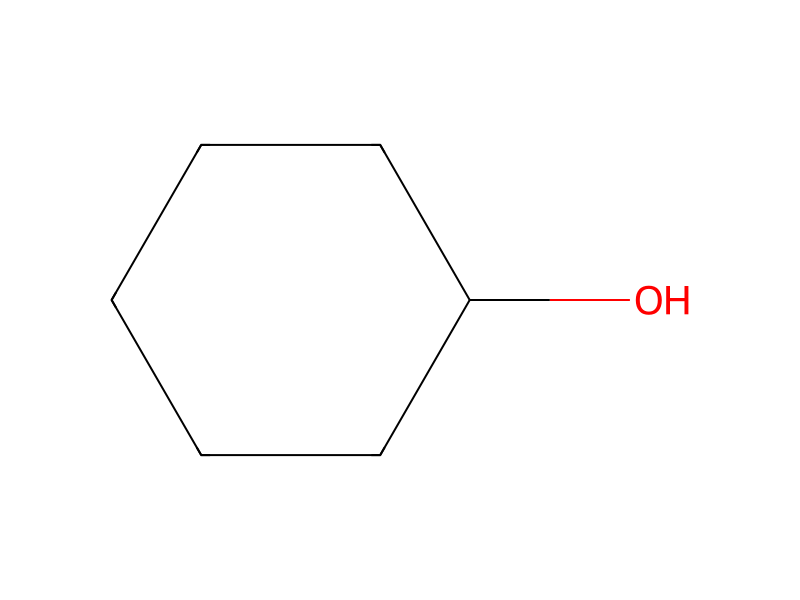



반응 조건
- 온도
- 0 °C
실험 절차
Into a one liter, four-necked, round bottom flask, equipped with stirrer, condenser and thermometer, 100.0 parts of pyridine and 16.55 parts of cyclohexanol were mixed under a nitrogen atmosphere and chilled to 0° C. with an ice water bath. To this solution 25.0 parts of 1,3-xylene-4,6-disulfonyl dichloride were added in portions over thirty minutes. The solution was stirred for one hour at 0° C. and then allowed to stand for twenty-four hours at 15° C. The mixture was poured into one liter of ice water and subsequently extracted with 300 parts of methylene chloride. The organic layer was washed successively with cold 6N sulfuric acid (until the water layer was acidic to pH paper), dilute sodium bicarbonate (three times with 300 part-portions), and water (twice with 300 part-portions). It was then dried over sodium sulfate, filtered, and the solvent removed in vacuo to yield the dicyclohexyl 1,3-xylene-4,6-disulfonate.