반응식

[C:1]([N:5]=[N:6][C:7](Cl)([CH2:9][C:10]([O:13][CH3:14])([CH3:12])[CH3:11])[CH3:8])([CH3:4])([CH3:3])[CH3:2].[C:16]([O:21][OH:22])([CH2:19][CH3:20])([CH3:18])[CH3:17].[OH-].[K+].C(N=NC(O)(CC(OC)(C)C)C)(C)(C)C>>[C:1]([N:5]=[N:6][C:7]([O:22][O:21][C:16]([CH2:19][CH3:20])([CH3:18])[CH3:17])([CH2:9][C:10]([O:13][CH3:14])([CH3:12])[CH3:11])[CH3:8])([CH3:4])([CH3:3])[CH3:2]참가 물질
5

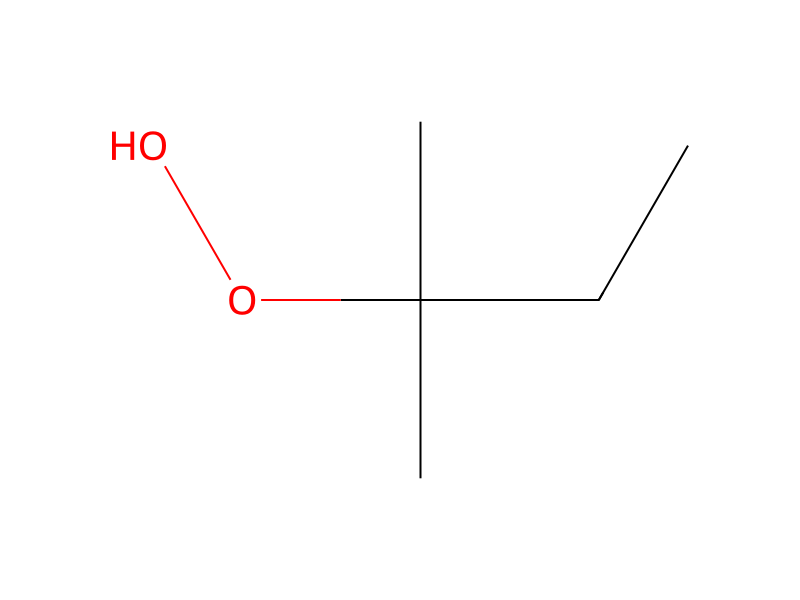


실험 절차
The 2-t-butylazo-2-(t-amylperoxy)-4-methoxy-4-methylpentane was prepared in 97% crude yield from 7.78 grams (0.0331 moles) of 2-t-butylazo-2-chloro-4-methoxy-4-methylpentane, 5.35 grams (0.0464 moles) of 90% t-amyl hydroperoxide and 7.92 grams (0.0353 moles) of 25% potassium hydroxide solution. The procedure was the same as that described in Example XX. The infrared spectrum of the product indicated there was a small amount of 2-t-butylazo-2-hydroxy-4-methoxy-4-methylpentane present in the product.
출처 및 근거
- ORD 기록
- ord-dcfe7a064a2a46a49157193b35d6a997
- 출처 데이터셋
- uspto-grants-1978_02
- 특허 번호
- US04075199
연결된 노트
불러오는 중…