Benzyl chloroformate → Benzyl 3-hydroxypyrrolidine-1-carboxylate
반응식

Cl.[NH:2]1[CH2:6][CH2:5][CH:4]([OH:7])[CH2:3]1.[OH-].[Na+].Cl[C:11]([O:13][CH2:14][C:15]1[CH:20]=[CH:19][CH:18]=[CH:17][CH:16]=1)=[O:12]>O>[OH:7][CH:4]1[CH2:5][CH2:6][N:2]([C:11]([O:13][CH2:14][C:15]2[CH:20]=[CH:19][CH:18]=[CH:17][CH:16]=2)=[O:12])[CH2:3]1참가 물질
5
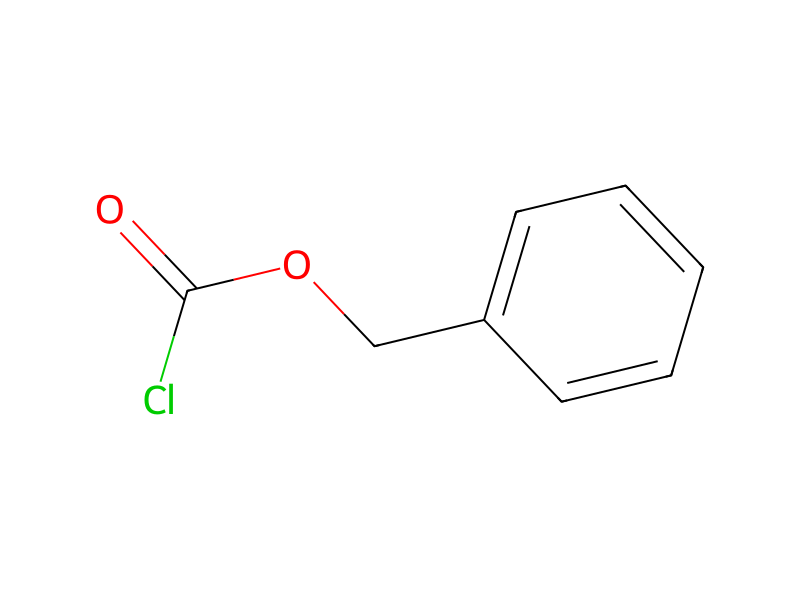




반응 조건
- 온도
- 5 °C
실험 절차
Into a 500 mL 3-necked round bottom flask was placed a solution of pyrrolidin-3-ol hydrochloride (20.2 g, 163.43 mmol) in H2O (60 mL) while cooling to 5° C. Adjustment of the pH to 7 was accomplished by the NaOH (10%). This was followed by the addition of a solution of benzyl chloroformate (36.8 g, 216.47 mmol), which was added dropwise with stirring, while cooling to a temperature of 5° C. The resulting solution was allowed to react, with stirring, for 2 hours at 5° C. Then the resulting solution was allowed to react, with stirring, for 1 hour while the temperature was maintained at room temperature. The reaction progress was monitored by TLC (ethyl acetate/petroleum ether=1:2). The resulting solution was extracted three times with 100 mL of ethyl acetate and the organic layers combined and dried over MgSO4 and concentrated by evaporation under vacuum using a rotary evaporator. This resulted in 30 g (crude) of benzyl 3-hydroxypyrrolidine-1-carboxylate as brown oil.