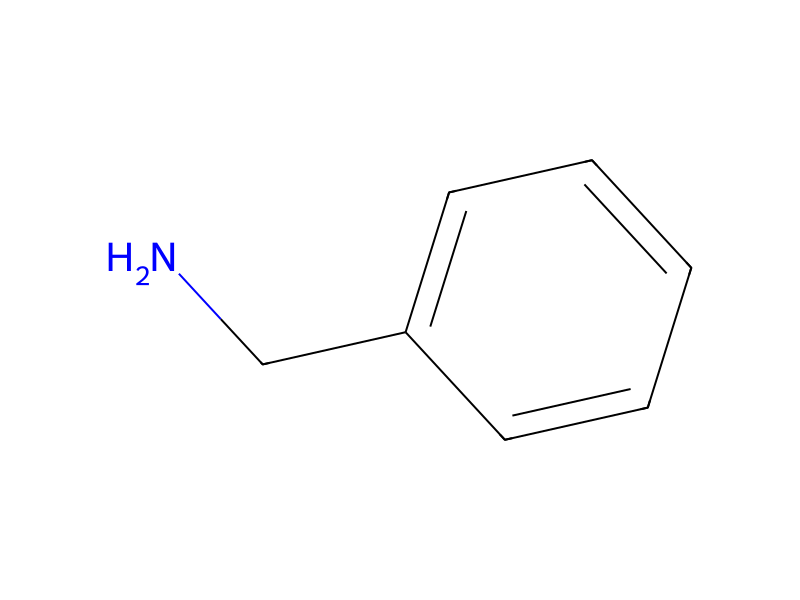
[Cl:1][C:2]1[C:7]([C:8](Cl)=[O:9])=[C:6]([Cl:11])[N:5]=[C:4]([S:12][CH3:13])[N:3]=1.C(N(CC)CC)C.[CH2:21]([NH2:28])[C:22]1[CH:27]=[CH:26][CH:25]=[CH:24][CH:23]=1>C1COCC1.CCOC(C)=O.O>[CH2:21]([NH:28][C:8]([C:7]1[C:6]([Cl:11])=[N:5][C:4]([S:12][CH3:13])=[N:3][C:2]=1[Cl:1])=[O:9])[C:22]1[CH:27]=[CH:26][CH:25]=[CH:24][CH:23]=1To a solution of 4,6-dichloro-2-methylsulfanylpyrimidine-5-carbonyl chloride in THF (15 mL), triethylamine (2.3 mmol) and benzylamine (2.5 mmol) are added at 0° C. After stirred at room temperature for 2 h, the reaction mixture is diluted with AcOEt and H2O. The mixture is extracted twice with AcOEt. The organic layer is dried over Na2SO4, filtered, and concentrated. The residue is purified by silica gel column chromatography to give 4,6-dichloro-2-methylsulfanylpyrimidine-5-carboxylic acid benzylamide as a white solid. 1H-NMR (CDCl3), δ 2.57 (3H, s), 4.66 (2H, d), 6.08 (1H, br s), 7.31-7.35 (2H, m), 7.36-7.38 (3H, m).