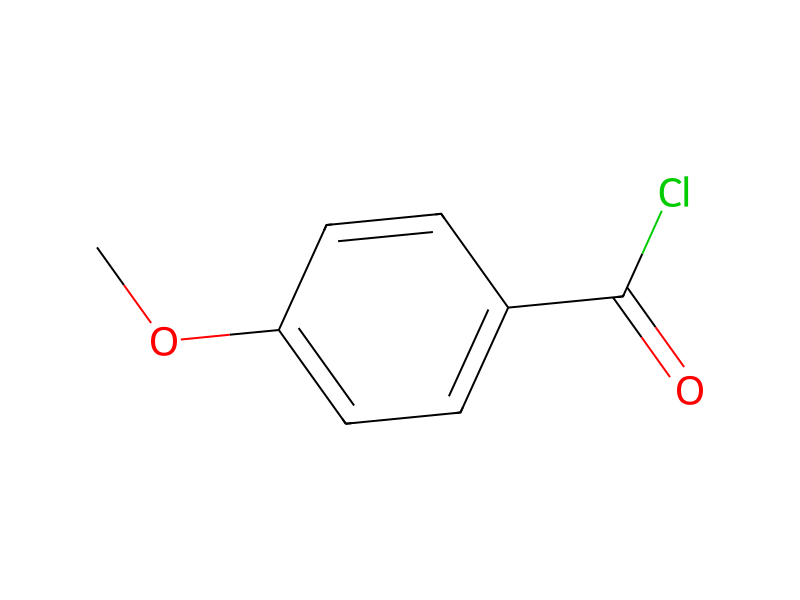
To a solution of 3-amino-6-(3-aminophenyl)-N-methylpyrazine-2-carboxamide (20 mg, 0.07 mmol) and triethylamine (160 mg, 0.16 mmol) in tetrahydrofuran (1 mL) was added p-anisoyl chloride (20 mg, 0.12 mmol) slowly at room temperature. The mixture was allowed to stir overnight. The reaction was quenched with water (10 mL) at 0° C. and diluted with ethyl acetate (200 mL). The organic layer was washed with saturated aqueous sodium bicarbonate (30 mL), saturated aqueous sodium chloride, and dried over magnesium sulfate. The solution was filtered and concentrated at reduced pressure to afford 3-amino-N-methyl-6-[3-({[4-(methyloxy)phenyl]carbonyl}amino)phenyl]pyrazine-2-carboxamide (13 mg, 48% yield) as yellow solid. 1H NMR (400 MHz, d6-DMSO): 10.10 (s, 1H), 8.85 (s, 2H), 8.30 (s, 1H), 8.02 (d, 2H), 7.90 (m, 2H), 7.40 (m, 1H), 7.02 (d, 2H), 3.80 (s, 3H), 2.82 (br s, 3H); MS (EI) for C20H19N5O3: 378 (MH+).