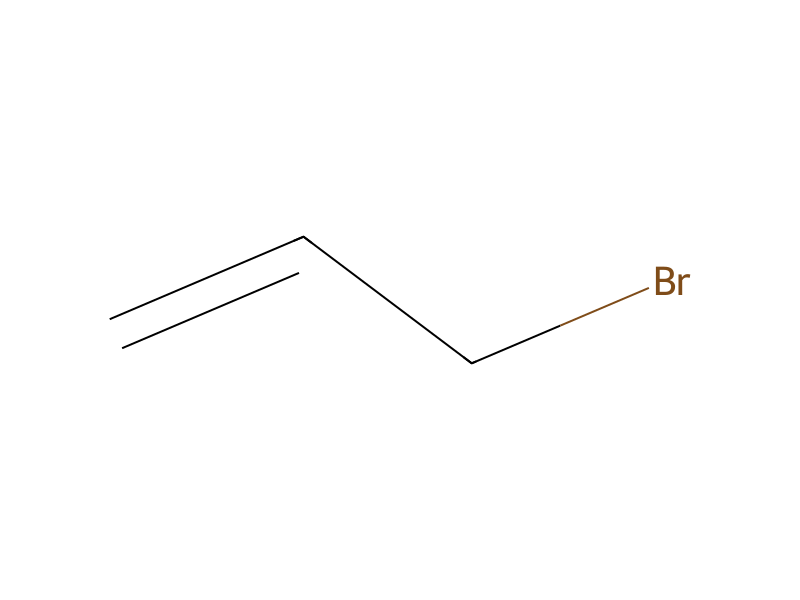
A suspension of 1,8-naphthyridine-2,7(1H,8H)-dione (8.0 g, 49.4 mmol)(prepared according to the method of Newkome, George R et al, Journal of Organic Chemistry (1981), 46(5), 833-9) in DMF (200 ml) was treated under argon with sodium hydride (2.2 g of 60% dispersion with mineral oil, 1.3 g, 55 mmol) then heated to 40° C. for 20 minutes. Allyl bromide (˜5 ml) was added. After 2 hours at 40° C. more sodium hydride (2.2 g of 60% dispersion with mineral oil, 1.3 g, 55 mmol) and allyl iodide (˜5 ml) were added. After a further 1 hour at 40° C. the mixture was cooled to room temperature and quenched with saturated aqueous ammonium chloride (5 ml). The mixture was evaporated and the residue chromatographed eluting with 0-10% ethyl acetate in hexane affording the product as a yellow oil (5.2 g, 45%).