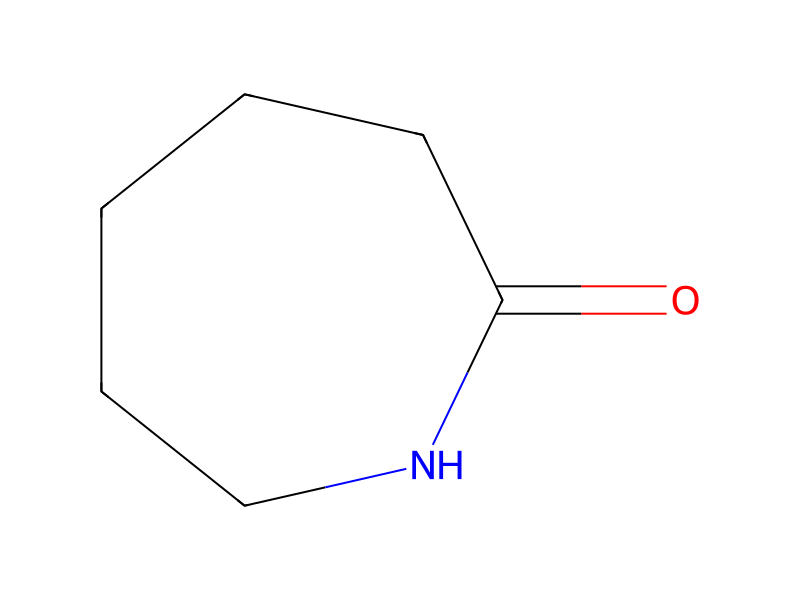
Hydrochloric Acid → Caprolactam
반응식

[C:1]1(=[O:8])[NH:7][CH2:6][CH2:5][CH2:4][CH2:3][CH2:2]1.C1(=N[OH:16])CCCCC1.Cl>>[C:1]1(=[O:8])[NH:7][CH2:6][CH2:5][CH2:4][CH2:3][CH2:2]1.[NH2:7][CH2:6][CH2:5][CH2:4][CH2:3][CH2:2][C:1]([OH:8])=[O:16]참가 물질
5



실험 절차
According to the present invention, the oxime that is the substrate can be put into a prescribed high-temperature high-pressure state within a short time, and hence hydrolysis of the oxime can be suppressed, and moreover by making an acid be present in the reaction zone, the lactam can be produced efficiently. Note, however, that a small amount of an amino acid may also be produced through the present reaction. For example, in the case of synthesizing ε-caprolactam from cyclohexanone oxime by reacting for 0.728 seconds under a high temperature of 375° C. and high pressure of 40 MPa, in the case that hydrochloric acid was made to be present at a concentration of 1.4 mol % relative to the reaction substrate, an ε-caprolactam yield of 96.2% and a 6-aminocaproic acid yield of 3.5% were obtained. In the case that such an acid was not present, the ε-caprolactam yield was 41.4% and the 6-aminocaproic acid yield was 0.3%. Conversion of 6-aminocaproic acid into ε-caprolactam is relatively easy, and this reaction also proceeds readily in high-temperature high-pressure water. In the above two reactions, only a very small amount of the hydrolysis product cyclohexanone was detected.