홈MCP워크벤치Skills
홈워크벤치알림마이페이지
llms.txt · MCP 가이드개인정보처리방침 · 이용약관 · 지원v1.8.0
  1. 홈
  2. /반응

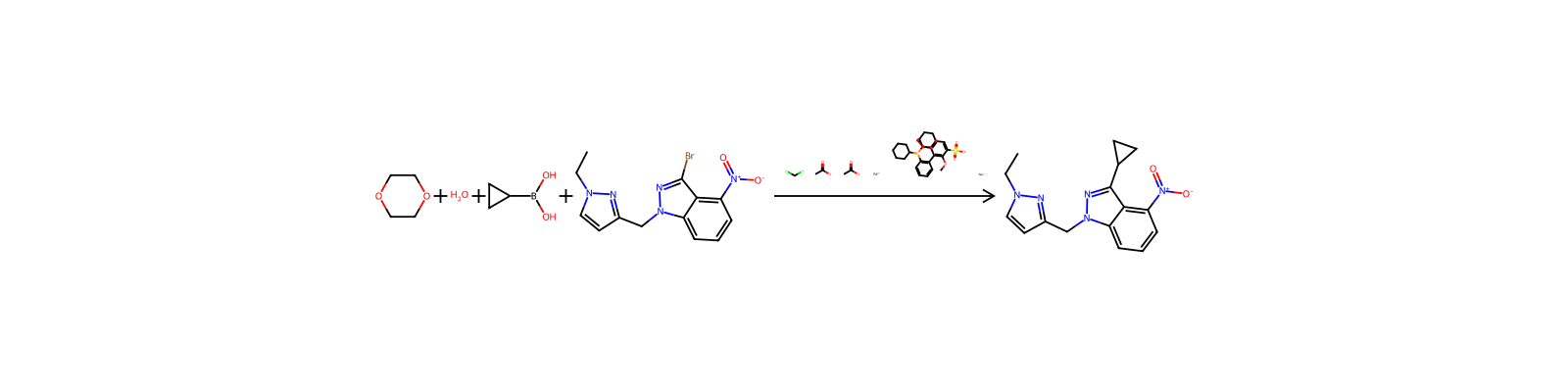
Cyclopropylboronic acid → 3-cyclopropyl-1-((1-ethyl-1H-pyrazol-3-yl)methyl)-4-nitro-1H-indazole

HRID 79387
노트
인쇄 미리보기

반응식

HRID 79387 반응식
O1CCOCC1.O.[CH:8]1(B(O)O)[CH2:10][CH2:9]1.Br[C:15]1[C:23]2[C:18](=[CH:19][CH:20]=[CH:21][C:22]=2[N+:24]([O-:26])=[O:25])[N:17]([CH2:27][C:28]2[CH:32]=[CH:31][N:30]([CH2:33][CH3:34])[N:29]=2)[N:16]=1>C(Cl)Cl.C([O-])(=O)C.C([O-])(=O)C.[Pd+2].C1(P(C2CCCCC2)C2C=CC=CC=2C2C(OC)=CC=C(S([O-])(=O)=O)C=2OC)CCCCC1.[Na+]>[CH:8]1([C:15]2[C:23]3[C:18](=[CH:19][CH:20]=[CH:21][C:22]=3[N+:24]([O-:26])=[O:25])[N:17]([CH2:27][C:28]3[CH:32]=[CH:31][N:30]([CH2:33][CH3:34])[N:29]=3)[N:16]=2)[CH2:10][CH2:9]1
참가 물질반응 조건실험 절차후처리출처 및 근거반응 노트

참가 물질

7

반응물 3

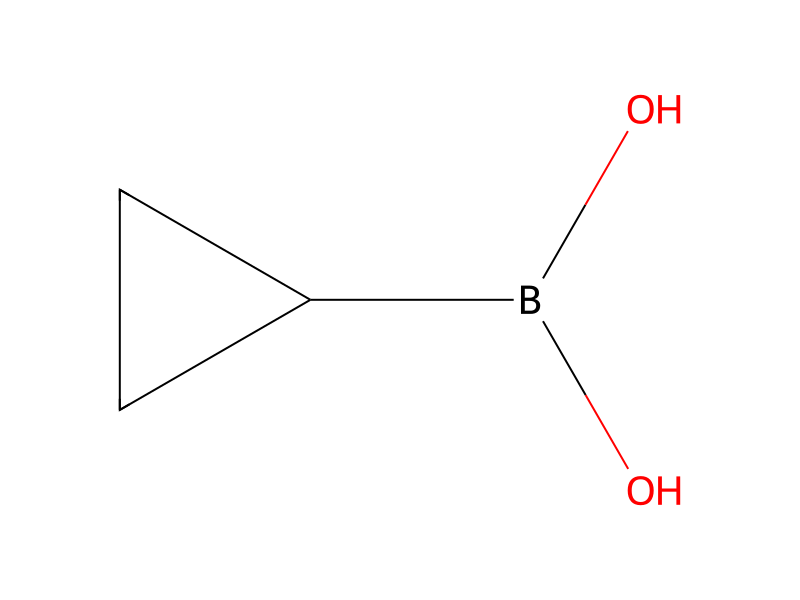
HCID 2760897Cyclopropylboronic acidHCID 218864351,4-Dioxane--water (1/1)HCID 672611563-Bromo-1-[(1-ethyl-1H-pyrazol-3-yl)methyl]-4-nitro-1H-indazole

생성물 1

HCID 708150333-cyclopropyl-1-((1-ethyl-1H-pyrazol-3-yl)methyl)-4-nitro-1H-indazole수율 99.8%

시약·촉매·용매 3

HCID 167845palladium(II) acetate촉매
HCID 23677046
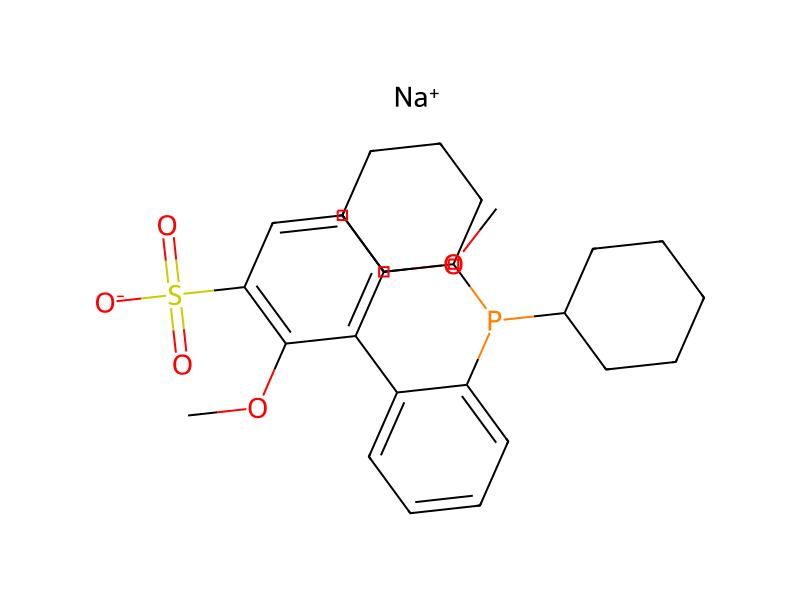
Sodium 2'-(dicyclohexylphosphino)-2,6-dimethoxybiphenyl-3-sulfonate
촉매
HCID 6344Dichloromethane용매

반응 조건

온도
0 °C

실험 절차

A 100 mL flask was charged with 1,4-dioxane/H2O (50 mL/10 mL). The flask was cooled to 0° C. under vacuum for 20 minutes. A 250 mL round bottom flask was charged with cyclopropylboronic acid (5.22 g, 60.8 mmol), 3-bromo-1-((1-ethyl-1H-pyrazol-3-yl)methyl)-4-nitro-1H-indazole (8.51 g, 24.3 mmol), palladium diacetate (0.218 g, 0.972 mmol) and sodium 2′-(dicyclohexylphosphino)-2,6-dimethoxybiphenyl-3-sulfonate (0.997 g, 1.94 mmol). The flask was evacuated and back filled with N2 (repeated 3 times). The cold degassed dioxane/H2O mixture was added to the 250 mL flask, which was evacuated and back filled with argon (repeated 5 times). The reaction mixture was heated to 100° C. for 6 hours. The mixture was cooled to ambient temperature, filtered through a pad of Celite, and the filter pad was washed with H2O and EtOAc. The aqueous layer was extracted with EtOAc. The combined organic phases were dried (Na2SO4) and concentrated under reduced pressure to give a dark colored residue, which was dissolved in DCM (20 mL) and silica gel (20 g) was added. DCM was removed under reduced pressure. The crude product absorbed by silica gel was loaded onto a short pad of silica gel and eluted with EtOAc/hexanes (1:1). The desired fractions were concentrated under reduced pressure to give the product (7.55 g).
후처리

  1. customThe flask was evacuated
  2. additionback filled with N2 (repeated 3 times)
  3. customThe cold degassed dioxane/H2O mixture
  4. additionwas added to the 250 mL flask, which
  5. customwas evacuated
  6. additionback filled with argon (repeated 5 times)
  7. temperatureThe reaction mixture was heated to 100° C. for 6 hours
  8. temperatureThe mixture was cooled to ambient temperature
  9. filtrationfiltered through a pad of Celite
  10. washthe filter pad was washed with H2O and EtOAc
  11. extractionThe aqueous layer was extracted with EtOAc
  12. dry with materialThe combined organic phases were dried (Na2SO4)
  13. concentrationconcentrated under reduced pressure
  14. customto give a dark colored residue, which
  15. additionsilica gel (20 g) was added
  16. customDCM was removed under reduced pressure
  17. customThe crude product absorbed by silica gel
  18. washeluted with EtOAc/hexanes (1:1)
  19. concentrationThe desired fractions were concentrated under reduced pressure

출처 및 근거

ORD 기록
ord-9e6f172a703f44b6b67756e5a1cbd720
출처 데이터셋
uspto-grants-2014_09
DOI
10.6084/m9.figshare.5104873.v1
특허 번호
US08841455B2

반응 노트

불러오는 중…

이 페이지에서참가 물질반응 조건실험 절차후처리출처 및 근거반응 노트