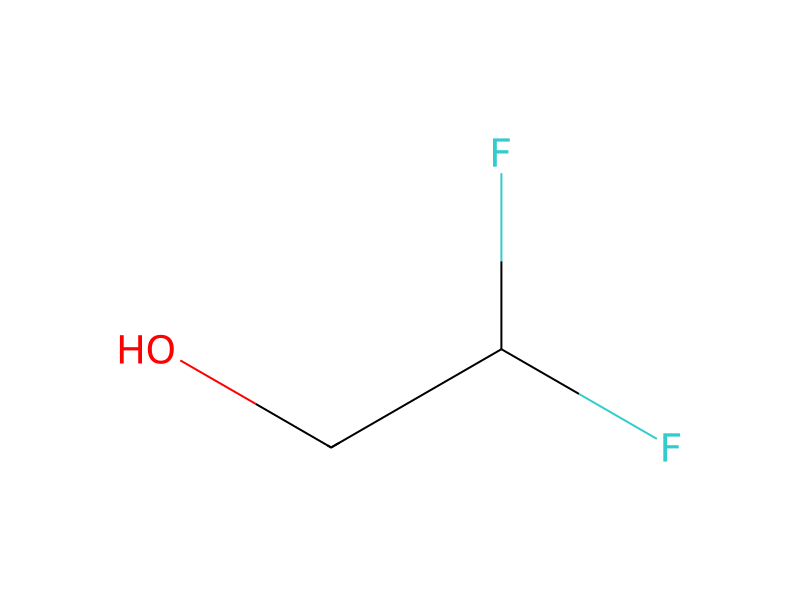
To a solution of 50.0 g (240.2 mmol) of 1-tert-butyl-5-hydroxy-3-trifluoromethyl-1H-pyrazole in 1000 ml of tetrahydrofuran were added 75.6 g (288.2 mmol) of triphenylphosphine and 23.7 g (288.8 mmol) of 2,2-difluoroethanol at room temperature, followed by stirring. Under ice-cooling, 58.3 g (288.3 mmol) of diisopropyl azodicarboxylate was added into the reaction solution, followed by 5 hours of stirring. After the completion of the reaction was confirmed, the reaction solution was poured into water and extracted with diethyl ether. The resulting organic layer was washed with water and dried over anhydrous magnesium sulfate. The solvent was removed by evaporation under reduced pressure and the residue was distilled under reduced pressure to obtain 38.2 g (yield: 58.4%) of 1-tert-butyl-5-(2,2-difluoroethoxy)-3-trifluoromethyl-1H-pyrazole.