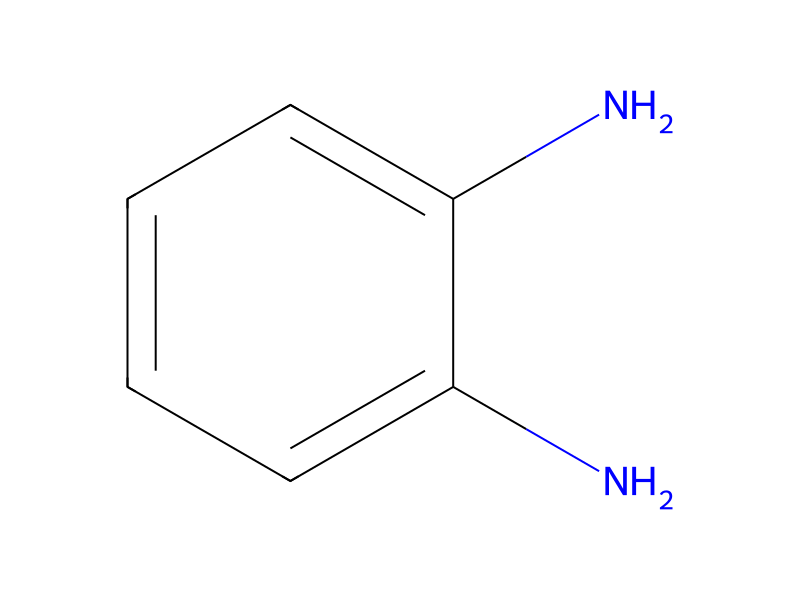
[CH3:1][C:2]1[C:3]([CH2:12][CH2:13][C:14](O)=O)=[N:4][C:5]2[C:10]([N:11]=1)=[CH:9][CH:8]=[CH:7][CH:6]=2.[C:17]1([NH2:24])[C:18]([NH2:23])=[CH:19][CH:20]=[CH:21][CH:22]=1.C([O-])([O-])=O.[Na+].[Na+]>Cl.O1CCOCC1>[NH:23]1[C:18]2[CH:19]=[CH:20][CH:21]=[CH:22][C:17]=2[N:24]=[C:14]1[CH2:13][CH2:12][C:3]1[C:2]([CH3:1])=[N:11][C:10]2[C:5](=[CH:6][CH:7]=[CH:8][CH:9]=2)[N:4]=13-(3-Methylquinoxalin-2-yl)propanoic acid (98 mg, 0.45 mmol) and benzene-1,2-diamine (98 mg, 0.45 mmol) were suspended in 4 M HCl in 1,4-dioxane (6 mL) and heated in the microwave (150° C., 2.5 h). The crude reaction was poured into saturated aqueous Na2CO3 solution (30 mL) and extracted with EtOAc (3×50 mL). The organic layers were combined, washed with brine (1×50 mL), dried (Na2SO4), filtered and concentrated. The crude material was purified by RPLC (Gilson). Fractions containing the compound were combined, diluted with EtOAc and washed with saturated aqueous Na2CO3, dried (Na2SO4), filtered and concentrated to give 2-(2-(1H-benzo[d]imidazol-2-yl)ethyl)-3-methylquinoxaline (8 mg) as an orange oil. LC-MS m/z 289 (M+H+).