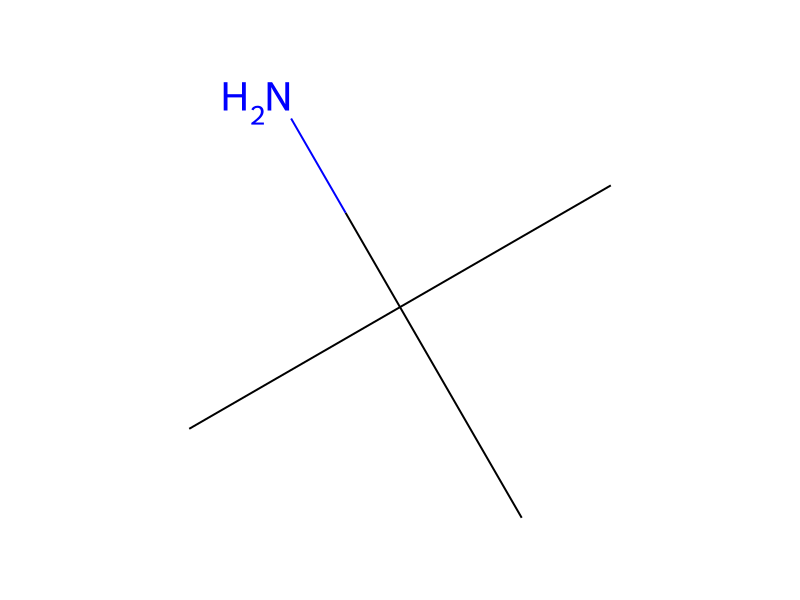
A mixture of 4-(6-butylamino-imidazo[1,2-b]pyridazin-3-yl)-2-fluoro-benzaldehyde (30 mg, 0.10 mmol) and dichloroethane (DCE, 1 mL) was treated with tert-butyl amine (0.011 mL, 0.11 mmol) and the resulting reaction mixture was maintained at RT for 20 min. The reaction was then treated with sodium triacetoxyborohydride (23 mg, 0.11 mmol) and the resulting mixture was maintained until LCMS indicated complete consumption of the aldehyde. The reaction was quenched with saturated aqueous sodium bicarbonate, the layers were separated, and the aqueous layer was extracted with dichloromethane (3×10 mL). The combined organic layers were washed with water (20 mL) and brine (20 mL), then dried (MgSO4), filtered and concentrated to afford a residue that was purified by reverse phase HPLC to afford butyl-{3-[4-(tert-butylamino-methyl)-3-fluoro-phenyl]-imidazo[1,2-b]pyridazin-6-yl}-amine (32 mg, 86%) as a white solid: 1H NMR (400 MHz, METHANOL-d4) δ ppm 8.21 (dd, J=12.3, 1.5 Hz, 1H), 7.93 (dd, J=8.0, 1.7 Hz, 1H), 7.82 (s, 1H), 7.58 (d, J=9.7 Hz, 1H), 7.50 (t, J=8.0 Hz, 1H), 6.68 (d, J=9.7 Hz, 1H), 4.02 (s, 2H), 3.34 (t, J=7.2 Hz, 2H), 1.60-1.73 (m, 2H), 1.39-1.51 (m, 2H), 1.24-1.35 (m, 10H), 0.91-1.00 (m, 3H); LCMS (ESI) m/e 370.2 [(M+H)+, calcd for C21H29FN5 370.2].