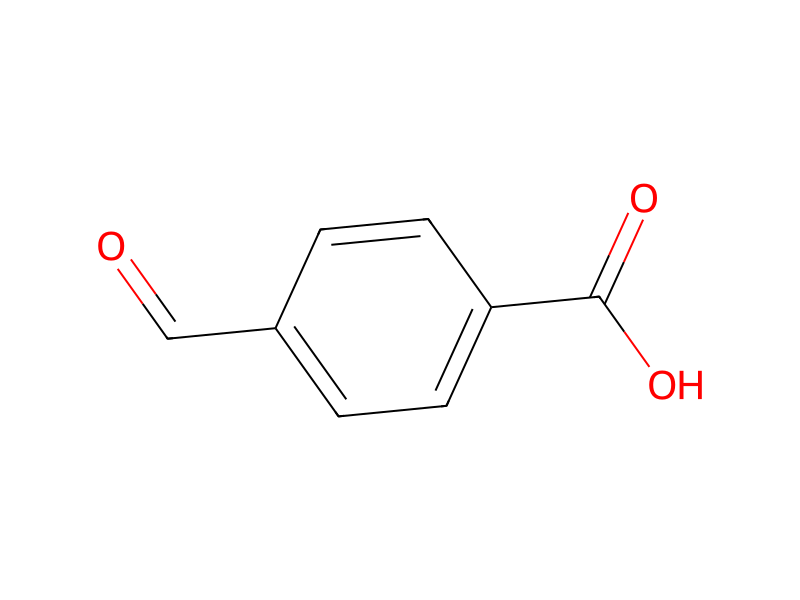
Commercially available 4-formylbenzoic acid (15.0 g, 0.1 mol) and commercially available 4′-hydroxy-3′-methylacetophenone (15.0 g, 0.1 mol) were dissolved in 150 mL of methanol and 50 mL of water. The solution was cooled with an ice-water bath, to which was added potassium hydroxide (28.0 g, 0.5 mol). The reaction mixture was stirred overnight. The resulted mixture was poured on to 600 mL of ice-water, acidified to pH=4-5 with 1 M HCl, filtered, washed with water (200 mL), and dried in the air. 25 g (87%) of a yellowish solid was obtained.