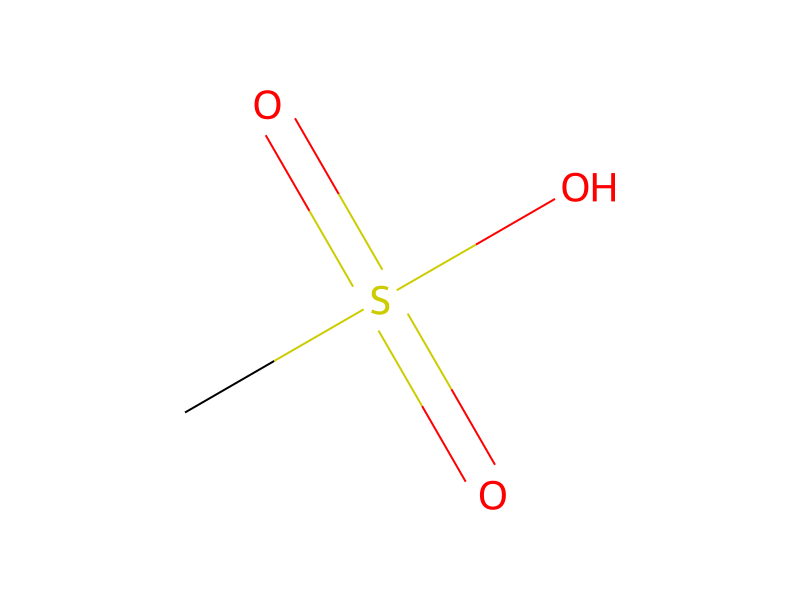
A solution of (R)-tert-butyl 2-amino-6-(3-(pyrrolidine-1-carbonyl)piperidin-1-yl)pyridin-3-ylcarbamate in ethyl acetate from the combined three batches from Step 1 (65 L total volume) was distilled under reduced pressure at 40° C. until the residual volume was approximately 8 L. An additional portion of ethyl acetate (48 L) was added, and the resulting solution was distilled under reduced pressure at 40° C. until the residual volume was approximately 8 L. Ethyl acetate (33 L), 1-(4-chloro-1H-pyrazol-1-yl)cyclopropanecarboxylic acid (2.28 kg, 12.2 mol), and N,N-diisopropylethylamine (4.74 kg, 36.7 mol) were added sequentially. To the resulting mixture at 20° C. was added a solution of 1-propanephosphonic acid cyclic anhydride in ethyl acetate (50% solution, 14.0 kg, 22.0 mol; plus a 2.0-L ethyl acetate rinse). The resulting mixture was heated to 40° C. and was held at that temperature for 8 h. The presence of (R)-tert-butyl 2-(1-(4-chloro-1H-pyrazol-1-yl)cyclopropanecarboxamido)-6-(3-(pyrrolidine-1-carbonyl)piperidin-1-yl)pyridin-3-ylcarbamate was confirmed by HPLC analysis of the mixture [HPLC retention time: 8.53 min (Column: Halo C18, 4.6×150 mm, 2.7 μm; Mobile Phase A: acetonitrile, Mobile Phase B: 0.05% methanesulfonic acid in water; Linear Gradient: 5:95 A:B to 95:5 A:B over 9 min, then held for 1 min; Flow: 1.0 mL/min; UV detection at 210, 226, and 254 nM)]. The mixture was then partitioned between ethyl acetate (38 L) and a 10% aqueous solution of citric acid (2×50 L). The organic layer was then washed sequentially with a 10% aqueous solution of potassium carbonate (31 L) and with water (24 L). The organic layer was then distilled under reduced pressure at 40° C. until the remaining volume was approximately 8 L. Acetonitrile (49 L) was added and the solution was distilled under reduced pressure at 40° C. until the remaining volume was approximately 26 L. Methanesulfonic acid (1.41 kg, 14.7 mol) was added via addition funnel, followed by an acetonitrile rinse (0.5 L). The reaction mixture was heated to 70° C. and was held at that temperature for 12 h, then was cooled to 20° C. over a period of 2 h. The resulting suspension was filtered, rinsing with acetonitrile (29 L). The solids were dried under a nitrogen flow and then in a vacuum oven (40° C.) to afford (R)-(1-(2-(1-(4-chloro-1H-pyrazol-1-yl)cyclopropyl)-3H-imidazo[4,5-b]pyridin-5-yl)piperidin-3-yl)(pyrrolidin-1-yl)methanone (3.1 kg, 47% over two steps). HPLC retention time: 5.85 min (Column: Halo C18, 4.6×150 mm, 2.7 μm; Mobile Phase A: acetonitrile, Mobile Phase B: 0.05% methanesulfonic acid in water; Linear Gradient: 5:95 A:B to 95:5 A:B over 12 min, then held for 2 min; Flow: 1.0 mL/min; UV detection at 210 nM). Chiral HPLC retention time: 4.30 min; Column: AS-H 4.6×150 mm, 5 μm; Mobile Phase A: supercritical carbon dioxide, Mobile Phase B: 0.1% isopropylamine in methanol; Gradient: 5% B to 45% B over 6 min, then held at 45% B for 2 min; Flow: 4.0 mL/min; Column temperature 40° C.; UV detection at 230 nM).