반응식

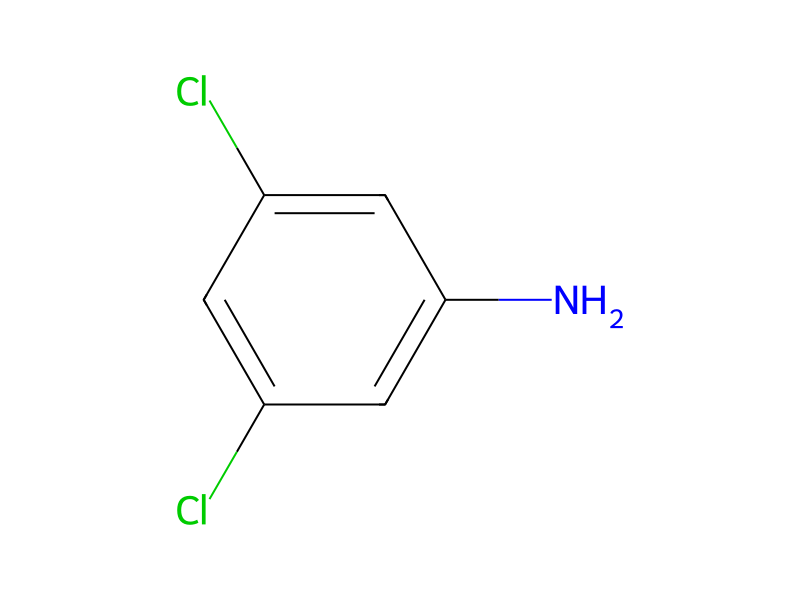
ClC1C=C(C=C(Cl)C=1)N.[Cl:10][C:11]1[CH:12]=[C:13]([N:18]2[C:22](=[O:23])[CH:21]([CH3:24])[S:20][CH2:19]2)[CH:14]=[C:15]([Cl:17])[CH:16]=1.C(O)(=S)C(C)[OH:27].C1NCSC1=O.ClC1C=C(C=CC=1)C(OO)=O>>[Cl:17][C:15]1[CH:14]=[C:13]([N:18]2[C:22](=[O:23])[CH:21]([CH3:24])[S:20](=[O:27])[CH2:19]2)[CH:12]=[C:11]([Cl:10])[CH:16]=1참가 물질
6



실험 절차
3,5-Dichloroaniline was converted to 3-(3,5-dichlorophenyl)-5-methyl-4-thiazolidinone in accordance with the procedure of Example 4. The only difference was that thiolactic acid was used instead of mercaptoacetic acid. The 3-(3,5-dichlorophenyl)-5-methyl-4-thiazolidinone had a melting point of 80°-88° C. This thiazolidinone (18 g) was oxidized with one equivalent of m-chloroperoxybenzoic acid (14 g) in the same manner as described in Example 2. After removal of the solvent, the reaction product was recrystallized from isopropyl alcohol to yield 3-(3,5-dichlorophenyl)-5-methyl-4-thiazolidinone 1-oxide, m.p. 146°-149° C.
후처리
- customAfter removal of the solvent
- customthe reaction product was recrystallized from isopropyl alcohol
출처 및 근거
- ORD 기록
- ord-76f70d012ff04b348964ca0546b61c5d
- 출처 데이터셋
- uspto-grants-1987_05
- 특허 번호
- US04664694
연결된 노트
불러오는 중…