2-chloro-9-ethyl-6-(3-fluoro-phenyl-amino)-9H-purine → 2-(2-Amino-ethyl-amino)-9-ethyl-6-(3-fluor-phenyl-amino)-9H-purine hydrochloride
HRID 9909
반응식

[Cl:1][C:2]1[N:10]=[C:9]2[C:5]([N:6]=[CH:7][N:8]2[CH2:11][CH3:12])=[C:4]([NH:13][C:14]2[CH:19]=[CH:18][CH:17]=[C:16]([F:20])[CH:15]=2)[N:3]=1>C(N)CN.C(OCC)(=O)C>[ClH:1].[NH2:3][CH2:4][CH2:5][NH:6][C:2]1[N:10]=[C:9]2[C:5]([N:6]=[CH:7][N:8]2[CH2:11][CH3:12])=[C:4]([NH:13][C:14]2[CH:19]=[CH:18][CH:17]=[C:16]([F:20])[CH:15]=2)[N:3]=1참가 물질
4


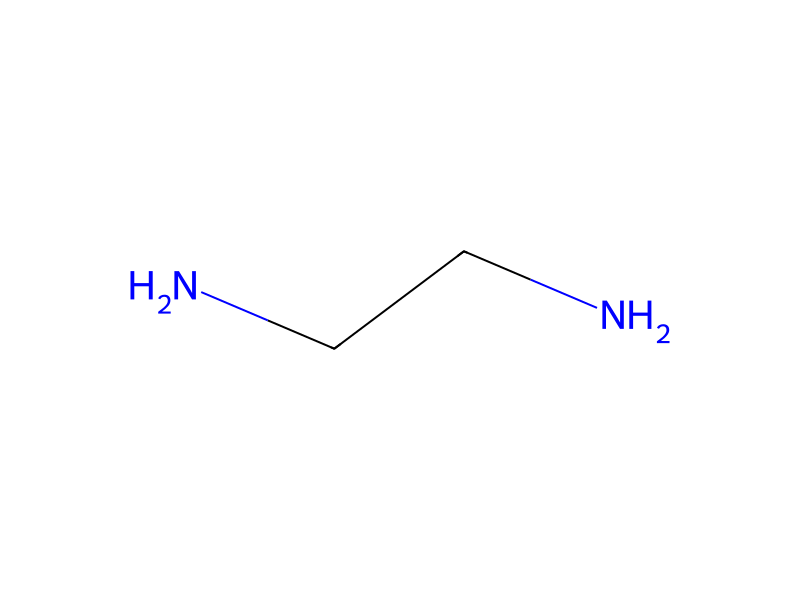

실험 절차
0.2 g (0.62 mmol) of 2-chloro-9-ethyl-6-(3-fluoro-phenyl-amino)-9H-purine is stirred in 2.5 ml of ethylenediamine at 75° C. for 3 h, and the mixture is allowed to cool and is diluted with ethyl acetate. The organic phase is washed with water, separated off and dried over sodium sulfate. After removal of the solvent, the residue is dissolved in dioxane, and treated with 4 N HCl in dioxane. 2-(2-Amino-ethyl-amino)-9-ethyl-6-(3-fluor-phenyl-amino)-9H-purine hydrochloride is obtained as a crystalline precipitate by this procedure. This precipitate is filtered off and dried; m.p.>250° C.; FAB-MS: (M+H)+=315; Rf=0.6 (ethyl acetate:isopropanol:water:22% aqueous ammonium hydroxide solution=40:60:15:18).