반응식

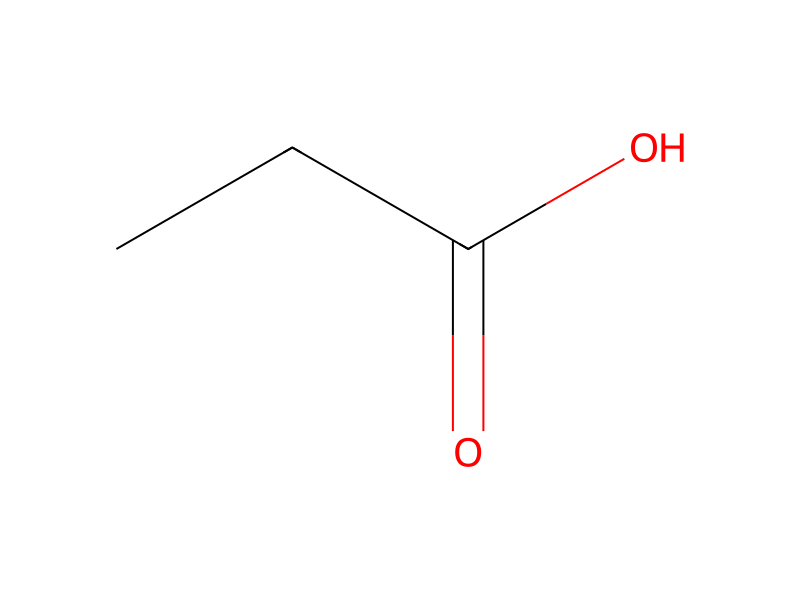
O=C[C@@H]([C@H]([C@@H]([C@@H](CO)O)O)O)O.C(O)(=O)CC.[OH:18][C@H:19]([CH2:24][CH3:25])[CH2:20][C:21]([O-:23])=[O:22]>>[OH:18][C@H:19]([CH3:24])[CH2:20][C:21]([OH:23])=[O:22].[OH:18][C@H:19]([CH2:24][CH3:25])[CH2:20][C:21]([OH:23])=[O:22]참가 물질



실험 절차
Ralstonia eutropha NCIMB 11599 was cultured in a medium containing 10 g/L of glucose and 1 g/L of propionic acid, according to the method previously reported (Kim et al., Enzyme Microbial. Technol., 16: 556-561, 1994). Poly-(R)-(−)-3-hydroxybutyrate-co-(R)-(−)-3-hydroxyvalerate (PHB/V) copolymer (containing 8 mol % (R)-(−)-3-hydroxyvalerate) was accumulated to a content of 63% of cell dry weight, which was auto-degraded to produce (R)-(−)-3-hydroxybutyric acid and (R)-(−)-3-hydroxyvaleric acid. Cells were dispersed in water at a copolymer concentration of 27.4 g/L. Auto-degradation reaction was carried out at pH 7 and 30° C. for 35 hours. As a result, 5.8 g/L of (R)-(−)-3-hydroxybutyric acid and 0.6 g/L of (R)-(−)-3-hydroxyvaleric acid were obtained. Therefore, a mixture of (R)-(−)-3-hydroxybutyric acid and (R)-(−)-3-hydroxyvaleric acid can be efficiently prepared from the accumulated PHB/V polymer by auto-degradation of the copolymer, and they can be separated using LC or HPLC (Ref. Example 16).
후처리
- customdry weight, which
출처 및 근거
- ORD 기록
- ord-a2a9aa54ef9547e3a8d602512ec47d3a
- 출처 데이터셋
- uspto-grants-2002_10
- 특허 번호
- US06472188B1
연결된 노트
불러오는 중…