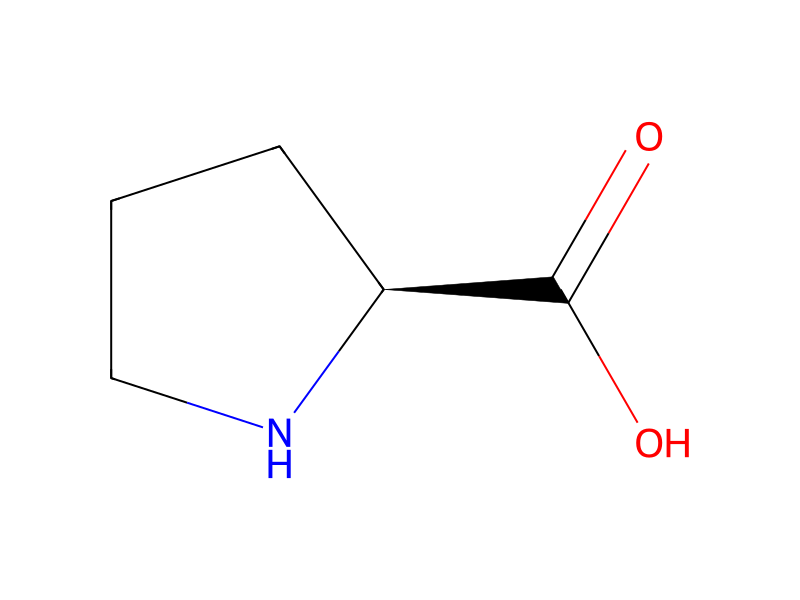
L-Proline → 3-(6,7,8,9-Tetrahydro-benzo[b]-[1,8]naphthyridin-8-yl)-propionic acid ethyl ester
Reaction equation

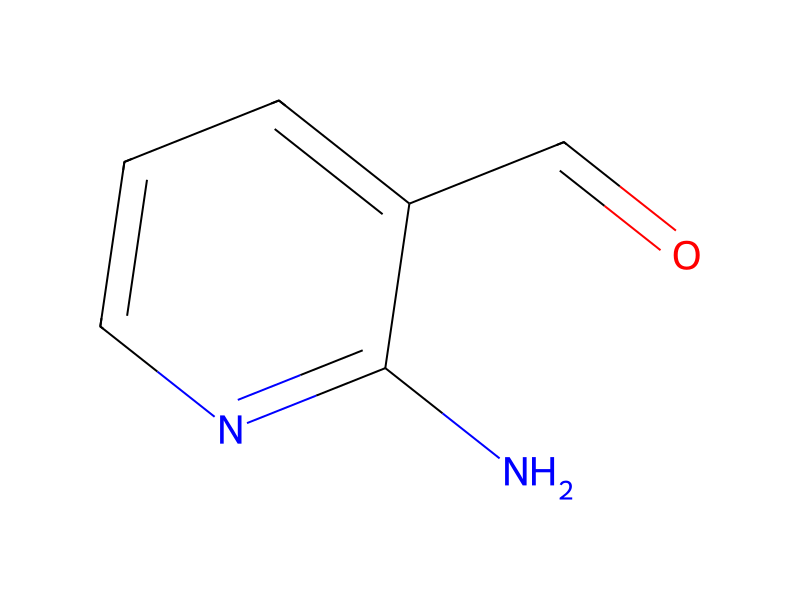
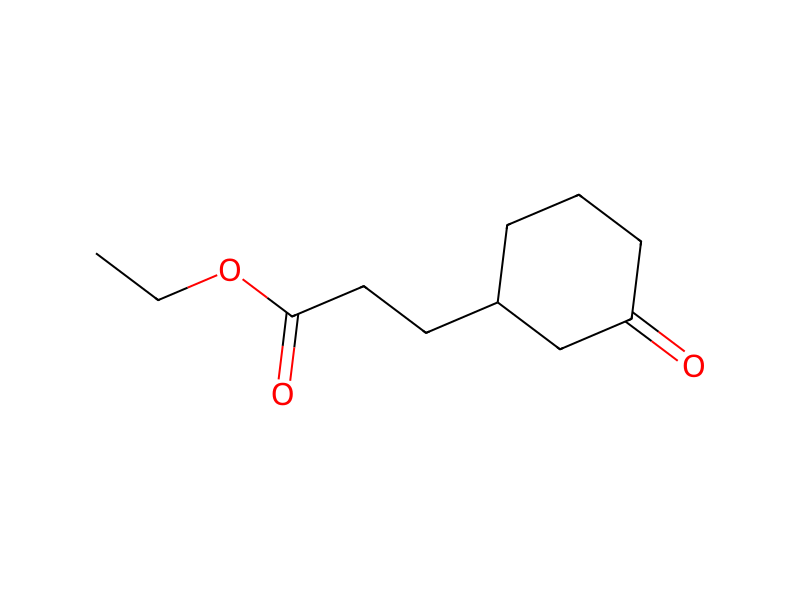
[NH2:1][C:2]1[C:7]([CH:8]=O)=[CH:6][CH:5]=[CH:4][N:3]=1.[CH2:10]([O:12][C:13](=[O:23])[CH2:14][CH2:15][CH:16]1[CH2:21][CH2:20][CH2:19][C:18](=O)[CH2:17]1)[CH3:11].N1CCC[C@H]1C(O)=O>C(O)C>[CH2:10]([O:12][C:13](=[O:23])[CH2:14][CH2:15][CH:16]1[CH2:17][C:18]2=[N:1][C:2]3[N:3]=[CH:4][CH:5]=[CH:6][C:7]=3[CH:8]=[C:19]2[CH2:20][CH2:21]1)[CH3:11]Participants
5


Procedure
A solution of 2-amino-pyridine-3-carbaldehyde (1-3) (0. 244 g, 2.0 mmol) and 3-(3-oxo-cyclohexyl)-propionic acid ethyl ester (14-1) (0.245 g, 2.00 mmol; for prep., see J. R. Wiseman et.al., J. Am. Chem. Soc., 1970, 92, 956-962) in ethanol (10 mL) was treated with L-proline (0.230 g, 2.00 mmol) and heated at reflux for 12 h. The solution was cooled to ambient temperature and concentrated. The residue was purified by flash chromatography (10% acetone in CH2Cl2) to give 14-2.
Workup
- temperatureheated
- temperatureat reflux for 12 h
- concentrationconcentrated
- customThe residue was purified by flash chromatography (10% acetone in CH2Cl2)
- customto give 14-2
Sources & evidence
- ORD record
- ord-97da16bc87734ee58140e3637bed2be9
- Source dataset
- uspto-grants-2000_04
- Patent number
- US06048861
Reaction notes
Loading…