Styrene → Phenethyltriethoxysilane
Reaction equation

[CH2:1]=[CH:2][C:3]1[CH:8]=[CH:7][CH:6]=[CH:5][CH:4]=1.[CH2:9]([O:11][SiH:12]([O:16][CH2:17][CH3:18])[O:13][CH2:14][CH3:15])[CH3:10].C([Si](C=C)(C)O[Si](C)(C)C)=C>C1(C)C=CC=CC=1>[CH2:1]([Si:12]([O:16][CH2:17][CH3:18])([O:13][CH2:14][CH3:15])[O:11][CH2:9][CH3:10])[CH2:2][C:3]1[CH:8]=[CH:7][CH:6]=[CH:5][CH:4]=1Participants
5
Reactant 3

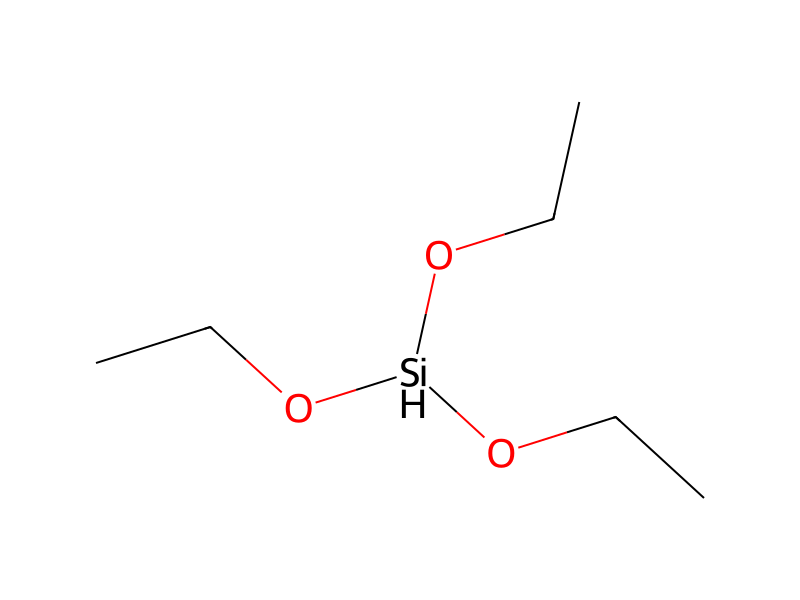

Product 1

Reagents, catalysts & solvents 1

Conditions
- Temperature
- 50 °C
Procedure
208 mg Of styrene, 328 mg of triethoxysilane, and 52 mg of toluene were placed in a glass reaction tube. Next, 0.002 ml of a toluene solution of a 0-valent platinum complex of divinyltetramethyldisiloxane (platinum content: 0.4 Wt. %) was added to this mixture. The reaction tube was sealed with a Teflon tape and heated for 1 hour in an oil bath at 50° C. When the tube contents were analyzed by GC-MS following cooling, the conversion rate of styrene was 7.4% and phenethyltriethoxysilane was produced at a yield of 1.6%. The yield of (α-methylbenzyl) triethoxysilane was 0.9%
Workup
- temperaturefollowing cooling
Sources & evidence
- ORD record
- ord-e3a99e4f267441959e75039ff2f64383
- Source dataset
- uspto-grants-2000_04
- Patent number
- US06048994
Reaction notes
Loading…