Water → 1-(4-Nitrophenyl)4-propyl-5-tetrazolone
Reaction equation

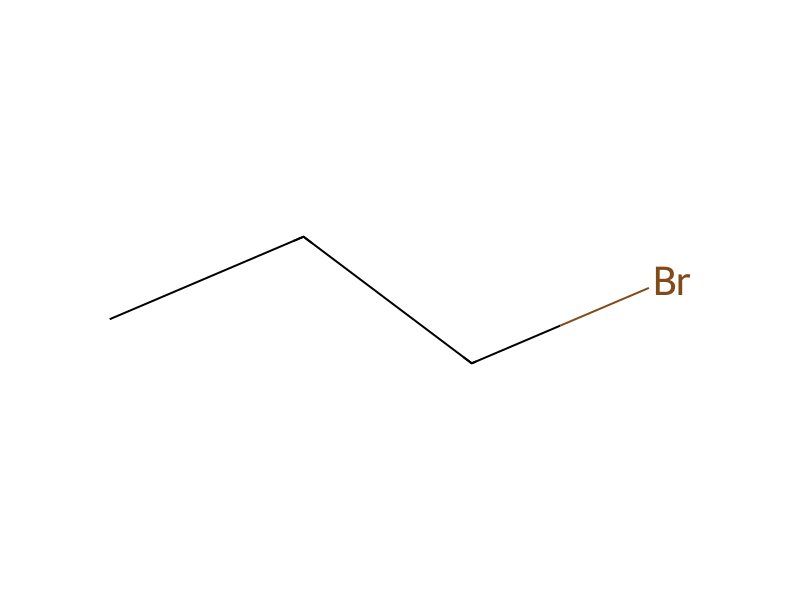
[N+:1]([C:4]1[CH:9]=[CH:8][C:7]([N:10]2[C:14](=[O:15])[N:13]=[N:12][NH:11]2)=[CH:6][CH:5]=1)([O-:3])=[O:2].[OH-].[K+].Br[CH2:19][CH2:20][CH3:21].O>CN(C)C=O>[N+:1]([C:4]1[CH:5]=[CH:6][C:7]([N:10]2[C:14](=[O:15])[N:13]([CH2:19][CH2:20][CH3:21])[N:12]=[N:11]2)=[CH:8][CH:9]=1)([O-:3])=[O:2]Participants
6
Reactant 4



Product 1

Reagents, catalysts & solvents 1

Conditions
- Temperature
- 55 °C
Procedure
To a stirred solution of 1-(4-nitrophenyl)-5-tetrazolone (6 g) in anhydrous N,N-dimethylformamide (30 mL) was added powdered 85% potassium hydroxide (1.9 g) and 1-bromopropane (3.9 g). The mixture was stirred at 55° C. for 2 hours and then poured into 300 mL of water. The biphasic mixture was extracted with ethyl acetate, dried (MgSO4), filtered and concentrated in vacuo. The crude product was purified by flash chromatography (silica gel, ethyl acetate:hexane) to afford 7.2 g of the title compound as a pale yellow solid. 1H NMR (CDCl3) δ 8.32 (ABq, JAB =9.6 Hz, 4 H), 4.02 (t, J=7.2 Hz, 2 H), 1.93 (m, 2 H), 1.03 (t, J=7.5 Hz, 3 H); MS (CI) m/z 250 (MH+); Rf =0.6 (25% ethyl acetate/hexane).
Workup
- extractionThe biphasic mixture was extracted with ethyl acetate
- dry with materialdried (MgSO4)
- filtrationfiltered
- concentrationconcentrated in vacuo
- customThe crude product was purified by flash chromatography (silica gel, ethyl acetate:hexane)
Sources & evidence
- ORD record
- ord-d74811bfc4f14f9a9430b22f4a5b30c4
- Source dataset
- uspto-grants-2000_04
- Patent number
- US06051586
Reaction notes
Loading…