Adipic Acid → 1-Decene
Reaction equation

[C:1](O)(=O)[CH2:2][CH2:3][CH2:4][CH2:5][CH2:6][CH2:7][C:8](O)=O.[C:13](O)(=O)[C:14]1C=CC=CC=1.[C:22](O)(=O)/C=C/C1C=CC=CC=1.[CH2:33]=CC1C=CC=CC=1.C(OC)(=O)C=CC1C=CC=CC=1.C1CCCCC=1.C(O)(=O)CCCCC(O)=O.C1CCCCCCC=1>O>[CH2:1]=[CH:2][CH2:3][CH2:4][CH2:5][CH2:6][CH2:7][CH2:8][CH2:13][CH3:14].[CH2:1]=[CH:2][CH2:3][CH2:4][CH2:5][CH2:6][CH2:7][CH2:8][CH3:22].[CH3:1]/[CH:2]=[CH:3]/[CH2:4][CH2:5][CH2:6][CH2:7][CH2:8][CH3:33]Participants
Reactant 8
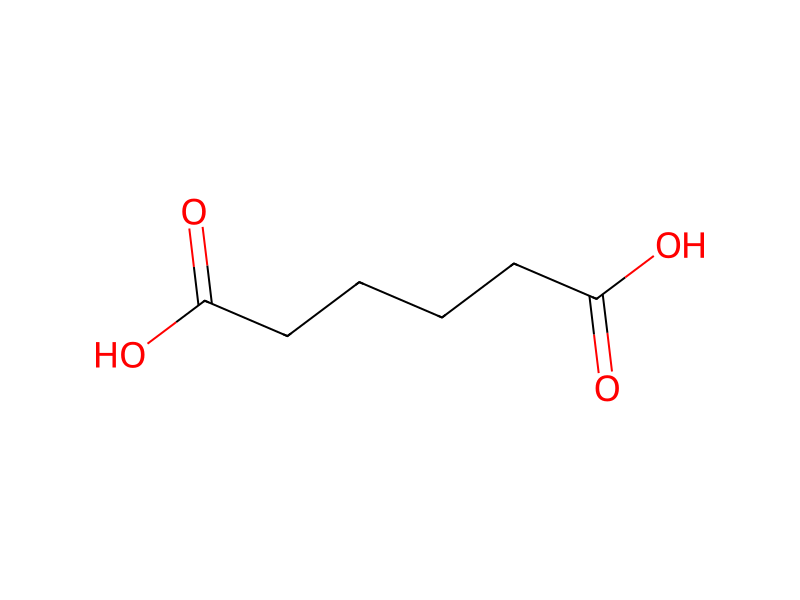
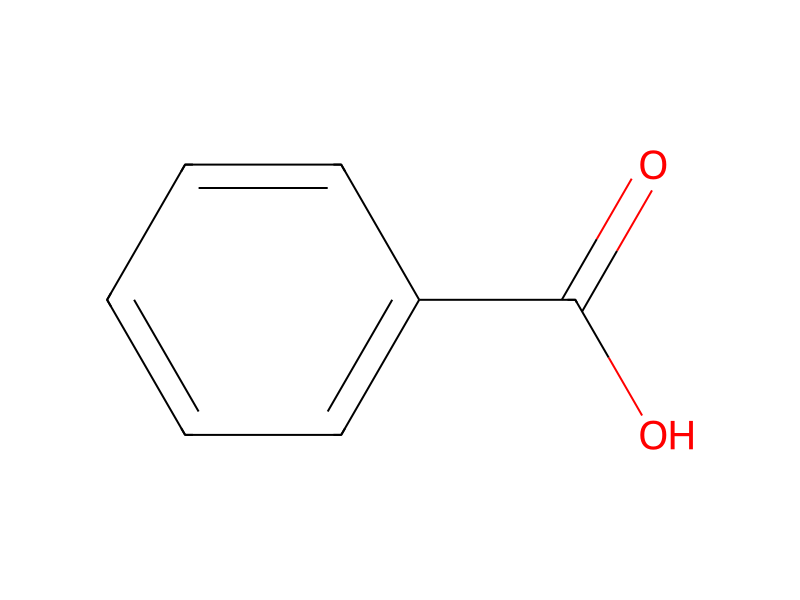


Product 3


Reagents, catalysts & solvents 1

Procedure
The results of the oxidation of the simple alkyl aromatic olefins to carboxylic acids using the process of the present invention are shown in Table 1 and FIGS. 7a and 7b. The process of the present invention oxidized both cis- and trans-stilbene (1 and 2) to two equivalents of benzoic acid (1a) in 95% yield. Trans-cinnamic acid (3), styrene (4), and methyl cinnamate (5) were also easily oxidized by the process of the present invention to 1a in 97%, 94% and 96% yields, respectively. Cyclohexene (6) was oxidized by the process of the present invention to the desired adipic acid (6a) but in a reduced yield, 50%, presumably due to its water solubility. However, cyclooctene (7) was easily oxidized by the process of the present invention to suberic acid (7a) with a yield of 82%. Additionally, simple alkyl olefins such as 1-decene (8), 1-nonene (9), and trans-2-nonene (10), all provided the appropriate alkyl carboxylic acids 8a, 9a, and 10a, respectively, in 93%, 90%, and 93% yields, respectively. Similarly, methyl oleate (11) provided a clean conversion to nonanoic acid (8a) and nonanedoic acid monomethyl ester (11a).
Workup
- customyields
Sources & evidence
- ORD record
- ord-0cb21f81977948eea06ab5c88083e6eb
- Source dataset
- uspto-grants-2004_09
- Patent number
- US06787671B2
Reaction notes
Loading…