Hexafluoroacetone → HCID 22282534, compound
Reaction equation

[C:1](=[O:8])([O:3][C:4]([CH3:7])([CH3:6])[CH3:5])[NH2:2].[F:9][C:10]([F:18])([F:17])[C:11]([C:13]([F:16])([F:15])[F:14])=[O:12]>ClCCl>[C:4]([O:3][C:1]([NH:2][C:11]([OH:12])([C:13]([F:16])([F:15])[F:14])[C:10]([F:18])([F:17])[F:9])=[O:8])([CH3:7])([CH3:6])[CH3:5]Participants
Reactant 2

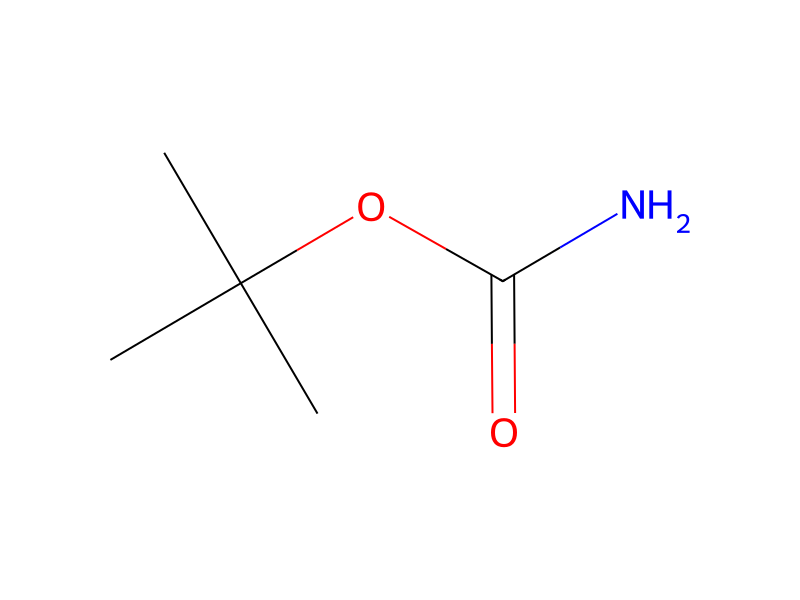
Product 1

Reagents, catalysts & solvents 1

Procedure
The 2-tert-butoxy-4,4-bis(trifluoromethyl)-1,3-oxazabuta-1 ,3-diene of formula II can be obtained by the method described by Steglich et al., Chemische Berichte 107:1488 (1974). The starting materials are tert-butyl carbamate ((CH3)3C—O—CO—NH2) and anhydrous hexafluoroacetone, which are initially reacted, for example, in a solvent such as dichloromethane at room temperature, to give 2-tert-butoxycarbonylamino-2-hydroxy-1,1,1,3,3,3-hexafluoropropane. This intermediate is then converted, for example, in a solvent such as diethyl ether at temperatures from about 0° C. to about 10° C., by treatment with trifluoroacetic anhydride in the presence of a base (e.g., quinoline), into the compound of formula II, which can be purified by distillation. Details of the preparation are described below.
Sources & evidence
- ORD record
- ord-c034556230684a0cab08842a7b3cc708
- Source dataset
- uspto-grants-2004_09
- Patent number
- US06794517B2
Reaction notes
Loading…