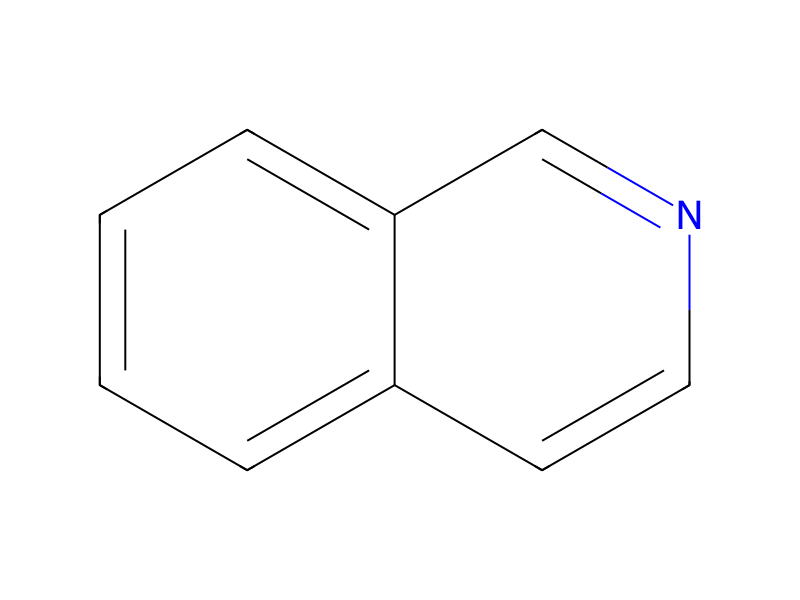
Isoquinoline → HCID 10912790, compound
Reaction equation

Br[CH2:2][CH2:3][C:4]1[C:12]2[C:7](=[CH:8][CH:9]=[CH:10][CH:11]=2)[NH:6][CH:5]=1.[CH:13]1[C:22]2[C:17](=[CH:18][CH:19]=[CH:20][CH:21]=2)[CH:16]=[CH:15][N:14]=1>O1CCOCC1>[NH:6]1[C:7]2[C:12](=[CH:11][CH:10]=[CH:9][CH:8]=2)[C:4]([CH2:3][CH2:2][N:14]2[CH2:15][CH2:16][C:17]3[C:22](=[CH:21][CH:20]=[CH:19][CH:18]=3)[CH2:13]2)=[CH:5]1Participants
4
Reactant 2

Product 1

Reagents, catalysts & solvents 1

Procedure
A solution of 3-(2-bromo-ethyl)-1H-indole (4.48 g, 20 mmol) and isoquinoline (5.33 g, 40 mmol) in abs. dioxan (50 mL) was stirred for 6 h at 80° C. The solvent was then removed in a vacuum, the residue mixed with CHCl3 (100 mL) and washed twice with water. The organic phase was dried over Na2SO4, concentrated to low volume in a vacuum, and the remaining residue purified by flash chromatography with CHCl3/MeOH (50:1).
Workup
- customThe solvent was then removed in a vacuum
- additionthe residue mixed with CHCl3 (100 mL)
- washwashed twice with water
- dry with materialThe organic phase was dried over Na2SO4
- concentrationconcentrated to low volume in a vacuum
- customthe remaining residue purified by flash chromatography with CHCl3/MeOH (50:1)
Sources & evidence
- ORD record
- ord-0e009ee5c1984fb5b250ce68b3a5de3e
- Source dataset
- uspto-grants-2011_07
- Patent number
- US07977370B2
Reaction notes
Loading…