4-Chloroaniline → 3-(4-Bromo-2-fluoro-phenyl)-N-(4-chloro-phenyl)-acrylamide
Reaction equation

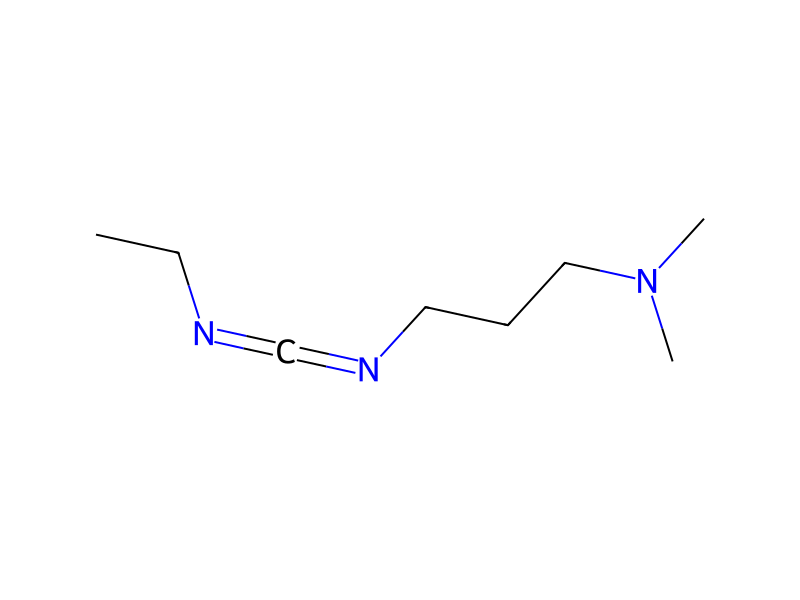
[Br:1][C:2]1[CH:7]=[CH:6][C:5]([CH:8]=[CH:9][C:10]([OH:12])=O)=[C:4]([F:13])[CH:3]=1.[Cl:14][C:15]1[CH:21]=[CH:20][C:18]([NH2:19])=[CH:17][CH:16]=1.C1C=CC2N(O)N=NC=2C=1.CCN=C=NCCCN(C)C>ClCCl>[Br:1][C:2]1[CH:7]=[CH:6][C:5]([CH:8]=[CH:9][C:10]([NH:19][C:18]2[CH:20]=[CH:21][C:15]([Cl:14])=[CH:16][CH:17]=2)=[O:12])=[C:4]([F:13])[CH:3]=1Participants
6
Reactant 4



Product 1

Reagents, catalysts & solvents 1

Procedure
A mixture of 3-(4-bromo-2-fluoro-phenyl)-acrylic acid (12.7 g, 52 mmol), 4-chloroaniline (9.9 g, 78 mmol), HOBt (10.5 g, 78 mmol) and EDCI (15.0 g, 78 mmol) in 200 mL of dichloromethane was refluxed overnight, and the resulting mixture was washed with 1M NaOH solution, water and brine, dried over Na2SO4, and concentrated. Recrystallization of the residue from EtOAc/Hexane gave 15 g (82%) of white solid. MS: calc'd 354 (MH+), exp 354 (MH+). 1H NMR (CDCl3, 400 MHz), 7.75 (d, 1H, J=15.6 Hz), 7.60 (d, 2H, J=8.8 Hz), 7.48 (s, 1H), 7.32-7.38 (m, 5H, J=7.6 Hz), 6.70 (d, 1H, J=15.6 Hz).
Workup
- temperaturewas refluxed overnight
- washthe resulting mixture was washed with 1M NaOH solution, water and brine
- dry with materialdried over Na2SO4
- concentrationconcentrated
- customRecrystallization of the residue from EtOAc/Hexane
Sources & evidence
- ORD record
- ord-120a4ce3b7964066a59fbc6c1de79da2
- Source dataset
- uspto-grants-2011_07
- Patent number
- US07977372B2
Reaction notes
Loading…