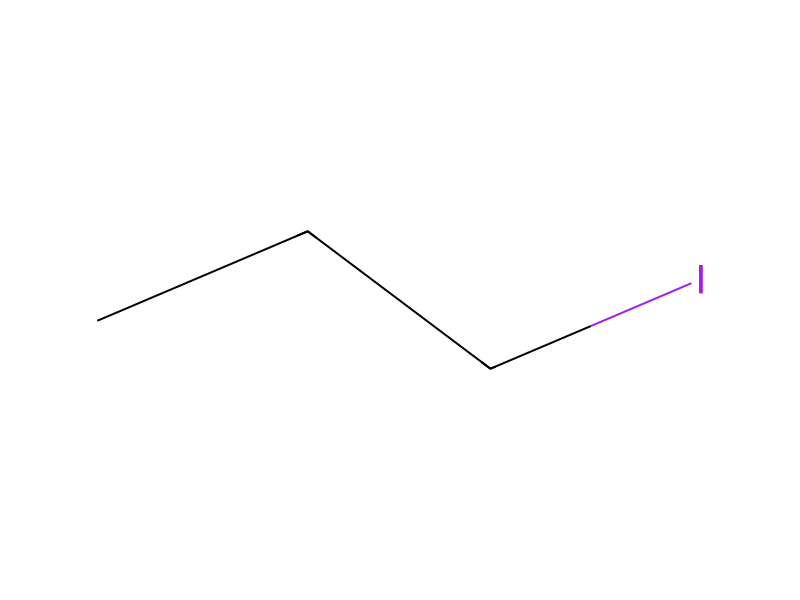
1-Iodopropane → 4-(3-Methoxy-4-nitrophenyl)-1-propylpyridinium iodide
Reaction equation

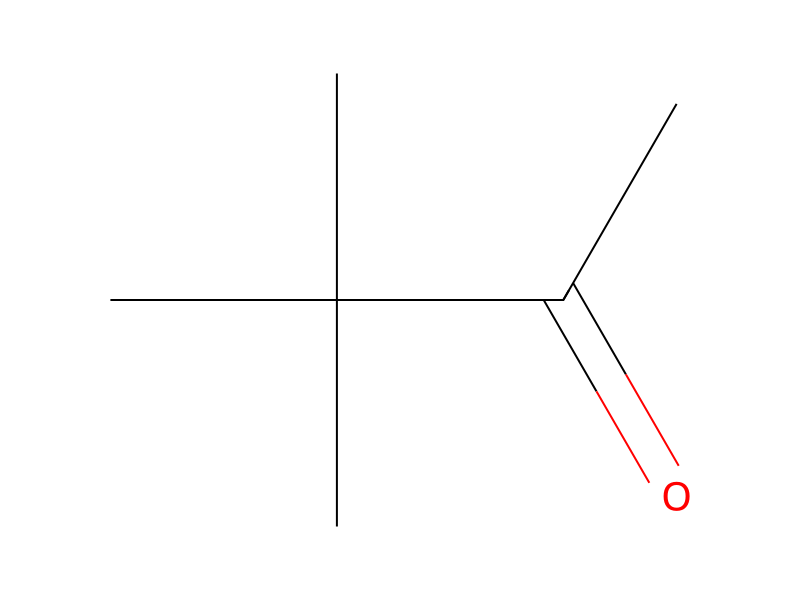
[CH2:1]([I:4])[CH2:2][CH3:3].[CH3:5][O:6][C:7]1[CH:8]=[C:9]([C:16]2[CH:21]=[CH:20][N:19]=[CH:18][CH:17]=2)[CH:10]=[CH:11][C:12]=1[N+:13]([O-:15])=[O:14]>CC(=O)C(C)(C)C>[I-:4].[CH3:5][O:6][C:7]1[CH:8]=[C:9]([C:16]2[CH:21]=[CH:20][N+:19]([CH2:1][CH2:2][CH3:3])=[CH:18][CH:17]=2)[CH:10]=[CH:11][C:12]=1[N+:13]([O-:15])=[O:14]Participants
Reactant 2

Product 1

Reagents, catalysts & solvents 1
Conditions
- Temperature
- 100 °C
Procedure
n-Propyliodide (200 mL, 2.05 mol) was added to a solution of 4-(3-methoxy-4-nitrophenyl)pyridine (25.0 g, 109 mmol) in pinacolone (500 mL). The reaction was fitted with a reflux condenser, stirred, and heated at 100° C. for 12 h. A light brown suspension was observed. An aliquot (˜2.0 mL) was taken out from the reaction mixture, concentrated, and analyzed by 1H NMR which revealed the formation of the alkylated product and the absence of starting material. The reaction was cooled; the solids were filtered off and rinsed once with cold (0° C.) acetone to afford 4-(3-methoxy-4-nitrophenyl)-1-propylpyridinium iodide as a light brown residue (29.0 g, 67% yield). 1 H NMR (400 MHz, DMSO-d6) δ ppm 0.92 (t, J=7.3 Hz, 3 H), 1.99 (dt, J=7.3, 7.3 Hz, 2 H), 4.08 (s, 3 H), 4.59 (t, J=7.1 Hz, 2 H), 7.78 (dd, J=1.5, 8.4 Hz, 1H), 7.92 (d, J=1.5 Hz, 1 H), 8.13 (d, J=8.4 Hz, 1 H), 8.65 (d, J=7.0 Hz, 2 H), 9.22 (d, J=6.6 Hz, 2 H).
Workup
- customThe reaction was fitted with a reflux condenser
- concentrationconcentrated
- temperatureThe reaction was cooled
- filtrationthe solids were filtered off
- washrinsed once with cold (0° C.) acetone
Sources & evidence
- ORD record
- ord-e730af83f38e4960bf25e80061ad1f54
- Source dataset
- uspto-grants-2011_07
- Patent number
- US07981903B2
Reaction notes
Loading…