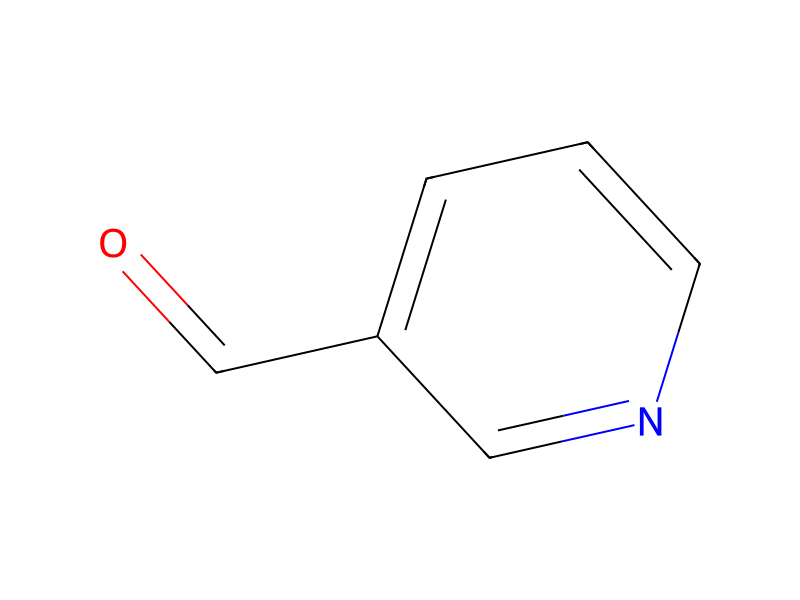
3-Pyridinecarboxaldehyde → HCID 12021084, compound
Reaction equation

[CH2:1]1[N:16]2[C:17]3[C:8]([O:9][C:10]4[CH:11]=[CH:12][CH:13]=[CH:14][C:15]=42)=[CH:7][CH:6]=[CH:5][C:4]=3[C:3](=[O:18])[CH2:2]1.[N:19]1[CH:24]=[CH:23][CH:22]=[C:21]([CH:25]=O)[CH:20]=1>>[N:19]1[CH:24]=[CH:23][CH:22]=[C:21]([CH2:25][C:2]2[C:3](=[O:18])[C:4]3[CH:5]=[CH:6][CH:7]=[C:8]4[C:17]=3[N:16]([CH:1]=2)[C:15]2[CH:14]=[CH:13][CH:12]=[CH:11][C:10]=2[O:9]4)[CH:20]=1Participants
3


Procedure
According to Example 1<step 4>, 1,2-dihydro-3H-pyrido[3,2,1-kl]phenoxazin-3-one (1 g) prepared by the procedure described in literature (J. Org. Chem., 24, 1699 (1959)) was reacted with pyridine-3-aldehyde (0.7 g) to obtain the title compound (1.2 g; 88%). The chemical structure thereof is shown below.
Workup
- customprepared by the procedure
Sources & evidence
- ORD record
- ord-0571ff8fb4404fee84401e6f64cce83d
- Source dataset
- uspto-grants-2002_11
- Patent number
- US06476021B1
Reaction notes
Loading…