Hydrochloric Acid → (3-Bromo-2-fluorophenyl)boronic acid
Reaction equation

C([Li])CCC.[Br:6][C:7]1[CH:12]=[CH:11][CH:10]=[C:9](Br)[C:8]=1[F:14].[B:15](OC)([O:18]C)[O:16]C.Cl>CCCCCC.C(OCC)C.O>[Br:6][C:7]1[C:8]([F:14])=[C:9]([B:15]([OH:18])[OH:16])[CH:10]=[CH:11][CH:12]=1Participants

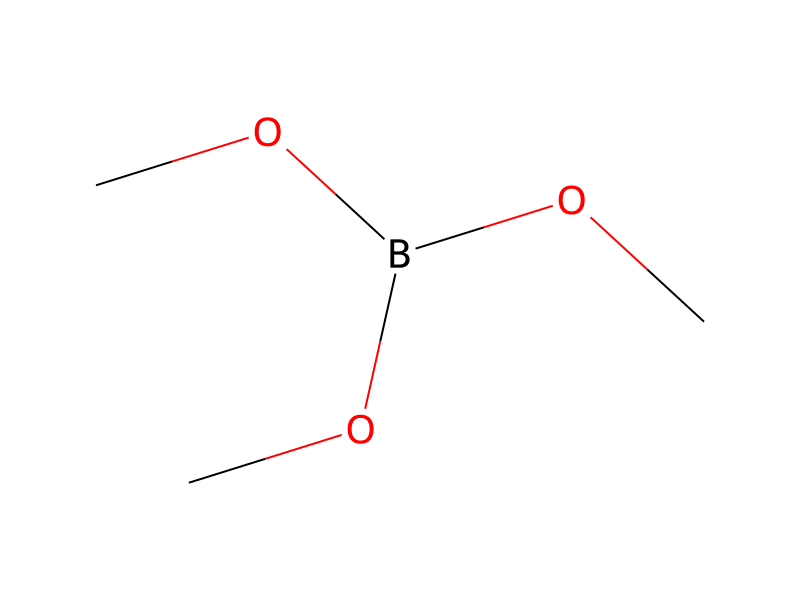






Procedure
290 ml of a 1.6 molar solution of butyllithium in hexane are added dropwise at −70° C. to a solution of 112 g of 2,6-dibromofluorobenzene [1435-54-7] in 1000 ml of diethyl ether. After the mixture has been kept at the same temperature for 2 hours, 60 ml of trimethyl borate are added, and the mixture is stirred at this temperature for 12 hours. After the mixture has been slowly warmed to room temperature, 300 ml of water are added, and the pH is adjusted to 1 by addition of hydrochloric acid. The organic phase is separated off, the aqueous phase is extracted twice with 100 ml of ether each time, and the combined organic phases are dried under reduced pressure, giving 91 g of 3-bromo-2-fluorophenylboronic acid (mixed with its cyclic anhydride) as a brown solid; 1H-NMR (DMSO-d6): 7.1-7.7 (m) ppm, 19F-NMR (DMSO-d6): −99 ppm.
Workup
- customThe organic phase is separated off
- extractionthe aqueous phase is extracted twice with 100 ml of ether each time
- customthe combined organic phases are dried under reduced pressure
Sources & evidence
- ORD record
- ord-6d2e62cd092b4c0c8def6d7daa57c2c9
- Source dataset
- uspto-grants-2002_11
- Patent number
- US06482478B1
Reaction notes
Loading…