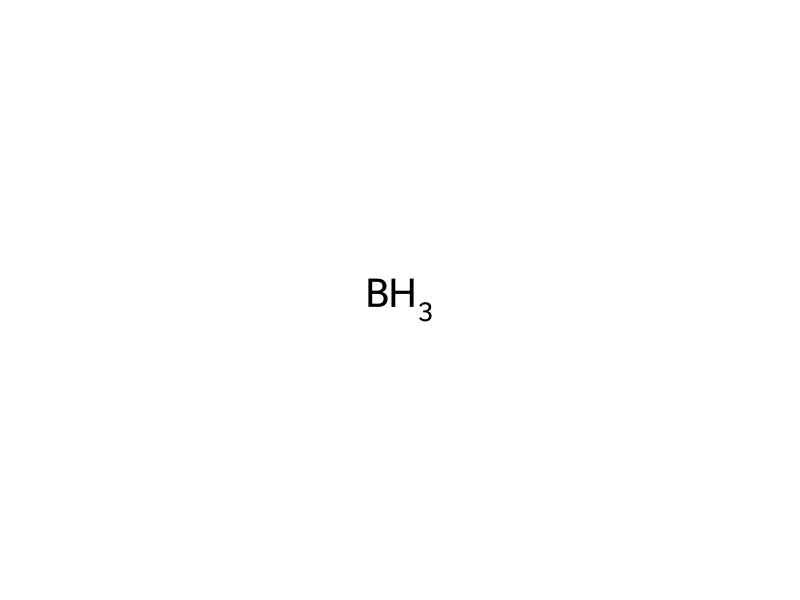
Borane → (4-Nitro-1,2-phenylene)dimethanol
Reaction equation

B.[N+:2]([C:5]1[CH:6]=[C:7]([C:14](O)=[O:15])[C:8](=[CH:12][CH:13]=1)[C:9](O)=[O:10])([O-:4])=[O:3]>O1CCCC1>[N+:2]([C:5]1[CH:13]=[CH:12][C:8]([CH2:9][OH:10])=[C:7]([CH2:14][OH:15])[CH:6]=1)([O-:4])=[O:3]Participants
Reactant 2

Product 1

Reagents, catalysts & solvents 1

Conditions
- Temperature
- 0 °C
Procedure
To a stirred solution of borane.tetrahydrofuran complex (70 mL of 1.5 M solution in tetrahydrofuran/diethyl ether) cooled to 0° C. under nitrogen was added a solution of 4-nitrophthalic acid (7.01 g; 33.2 mmol) in tetrahydrofuran (50 mL) dropwise over a 20 minute period. At the end of the addition, the mixture was allowed to stir for 3.5 h at 0° C. The mixture was allowed to warm to room temperature and then refluxed for 18 h. The mixture was allowed to cool to room temperature, quenched with methanol and concentrated in vacuo. The residue was taken up into ethyl acetate, washed with saturated sodium bicarbonate solution followed by brine solution. The organic extract was dried (sodium sulfate), filtered and concentrated in vacuo to give 5.61 g (92%) of 4-nitro-1,2-di-hydroxymethyl benzene as a white solid: ES-LRMS calcd for C8H8NO4 (M+−1) 182, found 182.
Workup
- additionAt the end of the addition
- temperatureto warm to room temperature
- temperaturerefluxed for 18 h
- temperatureto cool to room temperature
- customquenched with methanol
- concentrationconcentrated in vacuo
- washwashed with saturated sodium bicarbonate solution
- extractionThe organic extract
- dry with materialwas dried (sodium sulfate)
- filtrationfiltered
- concentrationconcentrated in vacuo
Sources & evidence
- ORD record
- ord-cc44fb13d1bf48b58cd7df69d4d59ad2
- Source dataset
- uspto-grants-2002_11
- Patent number
- US06482951B2
Reaction notes
Loading…