Methyl morpholine oxide → HCID 53889938, compound
Reaction equation

[CH3:1][O:2][C:3](=[O:15])[N:4]([C:7]1[CH:12]=[CH:11][CH:10]=[CH:9][C:8]=1[CH2:13]Br)[O:5][CH3:6].C[N+]1([O-])CC[O:20]CC1>C(#N)C>[CH3:1][O:2][C:3](=[O:15])[N:4]([C:7]1[CH:12]=[CH:11][CH:10]=[CH:9][C:8]=1[CH:13]=[O:20])[O:5][CH3:6]Participants
4
Reactant 2
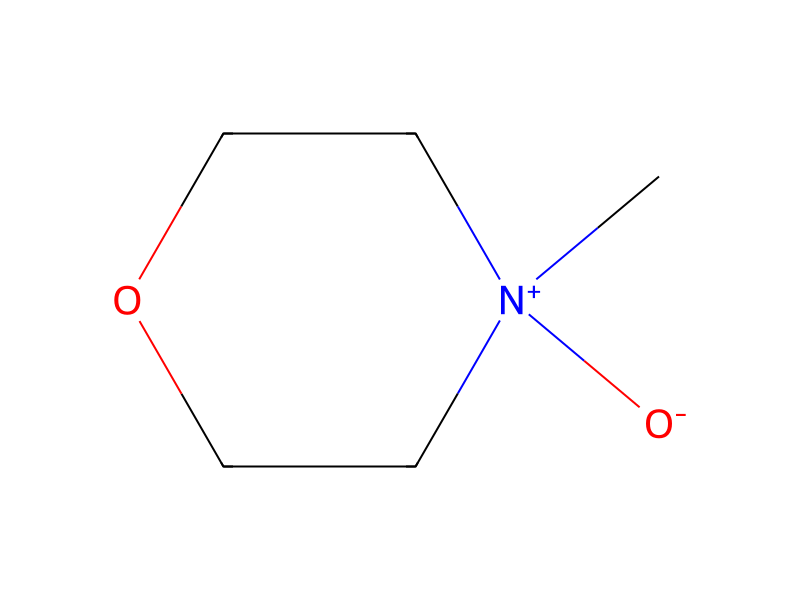

Product 1

Reagents, catalysts & solvents 1

Procedure
A solution of 27.4 g of (2-bromomethyl-phenyl)-N-methoxycarbamic acid methyl ester in 50 ml of acetonitrile is added dropwise at room temperature to 40 g of N-methyl-morpholine-N-oxide in 150 ml of acetonitrile. After stirring for 16 hours, the mixture is concentrated and the residue partitioned between ethyl acetate and water. The aqueous phase is extracted with ethyl acetate and, after drying over sodium sulphate, the solvent is distilled from the combined organic phases. The residue is purified on silica gel using ethyl acetate/hexane (1:5% by volume). The title compound is obtained in the form of a yellow oil.
Workup
- concentrationthe mixture is concentrated
- customthe residue partitioned between ethyl acetate and water
- extractionThe aqueous phase is extracted with ethyl acetate
- dry with materialafter drying over sodium sulphate
- distillationthe solvent is distilled from the combined organic phases
- customThe residue is purified on silica gel
Sources & evidence
- ORD record
- ord-38299a3b792046058349a9fbcd30251e
- Source dataset
- uspto-grants-2002_11
- Patent number
- US06486341B1
Reaction notes
Loading…