2-Chloropyridine → HCID 59500175, compound
Reaction equation

[CH:1]1[C:9]2[C:8]3[CH:10]=[CH:11][CH:12]=[CH:13][C:7]=3[O:6][C:5]=2[C:4](B(O)O)=[CH:3][CH:2]=1.Cl[C:18]1[CH:23]=[CH:22][CH:21]=[CH:20][N:19]=1.P([O-])([O-])([O-])=O.[K+].[K+].[K+]>C1(C)C=CC=CC=1.O.C1(P(C2CCCCC2)C2C=CC=CC=2C2C(OC)=CC=CC=2OC)CCCCC1>[CH:1]1[C:9]2[C:8]3[CH:10]=[CH:11][CH:12]=[CH:13][C:7]=3[O:6][C:5]=2[C:4]([C:18]2[CH:23]=[CH:22][CH:21]=[CH:20][N:19]=2)=[CH:3][CH:2]=1Participants
7
Reactant 3



Product 1

Reagents, catalysts & solvents 3


Procedure
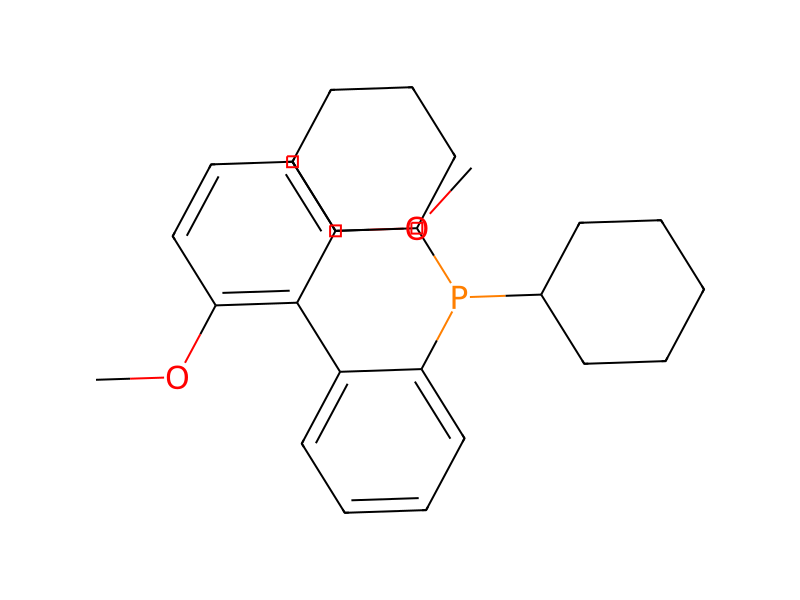
4-dibenzofuranboronic acid (5.0 g, 23.6 mmol), 2-chloropyridine (2.2 g, 20 mmol), dicyclohexyl(2′,6′-dimethoxybiphenyl-2-yl)phosphine (S-Phos) (0.36 g, 0.8 mmol), and potassium phosphate (11.4 g, 50 mmol) were mixed in 100 mL of toluene and 10 mL of water. Nitrogen is bubbled directly into the mixture for 30 minutes. Next, Pd2(dba)3 was added (0.18 g, 0.2 mmol) and the mixture was heated to reflux under nitrogen for 8 h. The mixture was cooled and the organic layer was separated. The organic layers are washed with brine, dried over magnesium sulfate, filtered, and evaporated to a residue. The residue was purified by column chromatography eluting with dichloromethane. 4.5 g of desired product was obtained after purification.
Workup
- customNitrogen is bubbled directly into the mixture for 30 minutes
- additionNext, Pd2(dba)3 was added (0.18 g, 0.2 mmol)
- temperaturethe mixture was heated
- temperatureto reflux under nitrogen for 8 h
- temperatureThe mixture was cooled
- customthe organic layer was separated
- washThe organic layers are washed with brine
- dry with materialdried over magnesium sulfate
- filtrationfiltered
- customevaporated to a residue
- customThe residue was purified by column chromatography
- washeluting with dichloromethane
Sources & evidence
- ORD record
- ord-7f0f7fca3c4f4f278960eeca11358541
- Source dataset
- uspto-grants-2014_05
- Patent number
- US08722205B2
Reaction notes
Loading…