Octane → D-Arabitol
Reaction equation

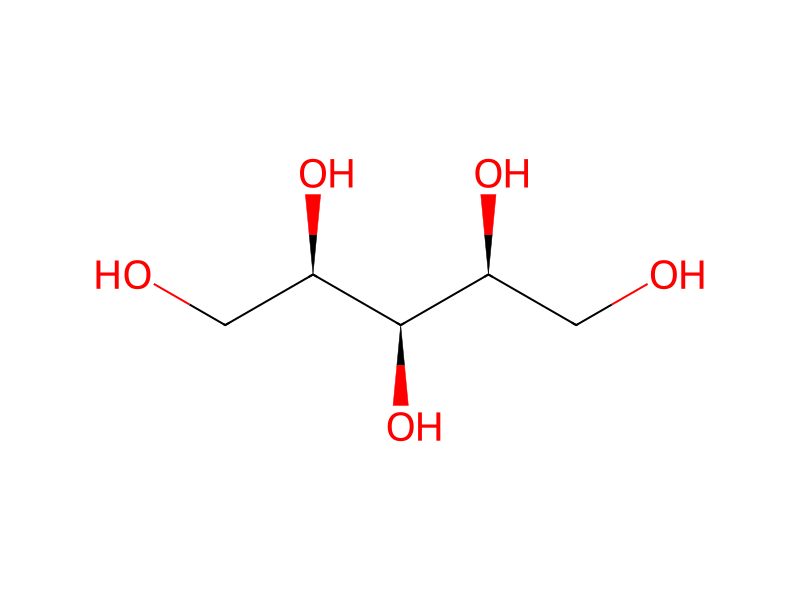
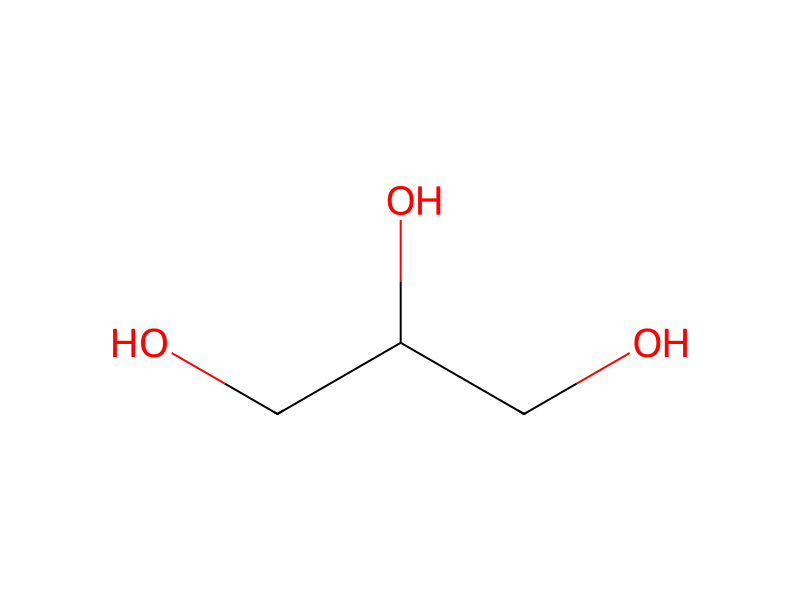
CC(CO)(O)C(C)(C)O.CCOCC.CCCCCCCC.C[C@:24]([CH2:36][OH:37])([OH:35])[C@:25](C)([OH:33])[C@@:26](C)([OH:31])[C:27](C)(C)[OH:28].C[C@:39](CO)([OH:53])[C@@:40](C)([OH:51])[C@:41](C)([OH:49])[C@@:42](C)([OH:47])[C:43](C)(C)[OH:44]>OCC(CO)O.C(CC(C)(C)C)(C)C>[CH2:27]([OH:28])[C@@H:26]([C@H:25]([C@@H:24]([CH2:36][OH:37])[OH:35])[OH:33])[OH:31].[CH2:39]([OH:53])[C@@H:40]([OH:51])[CH:41]([OH:49])[C@H:42]([OH:47])[CH2:43][OH:44]Participants



Procedure
The alkoxy polyol ethers produced by the alkylation reactions may be used as fuels, solvents, and lubricants, including oils and greases. As noted above, the ethers are more volatile and hydrophobic than their corresponding polyols, and unlike esters, the ethers are chemically and thermally stable, rendering the ethers as attractive renewable alternatives for fuels, solvents and lubricants. For example, trimethylglycerol ether has a calculated boiling point of 131° C. and melting point of −65° C., which compares well with isooctane (B.pt. 106/M.pt. −107° C.) or with the major alkane component of gasoline, n-octane (B.pt. 110/M.pt. −94° C.). Monomethyl- and dimethyl-glycerol ethers have higher B.pts (244 and 177° C., respectively), and higher polyol ethers such as pentamethylxylitol or hexamethylsorbitol are oils (calc. M.pts −5 and 25° C., respectively). Ethers produced from smaller polyols, such as xylitol, arabitol and preferably glycerol, and most preferably their methoxy or ethoxy ethers, are particularly suitable for replacing at least a portion of the combustible components of conventional fuels, such as kerosene or gasoline. Thus, the ethers may be used as fuels for a variety of internal combustion engines, including reciprocating engines (including piston engines such as a two-stroke engine, four stroke engine and diesel engine), rotary engines, gas turbines, and jet engines (including but not limited to a turbojet, turbofan, ramjet and rocket). These ethers produced from smaller polyols may also be used as solvents, particularly for paints and plastics. Ethers produced from larger polyols, particularly those having 6 or more carbons, are generally less volatile and behave like conventional greases, waxes and heavy oils, and thus are particularly suited for use as lubricants.
Workup
- custom244 and 177° C.
- customM.pts −5 and 25° C.
Sources & evidence
- ORD record
- ord-e974146bf6854c10b79977718da33a9a
- Source dataset
- uspto-grants-2014_05
- Patent number
- US08722943B1
Reaction notes
Loading…