Sodium Carbonate → 4-Fluoro-N-(5-imidazo[1,2-a]pyridin-3-yl-3-pyridinyl)benzenesulfonamide
Reaction equation

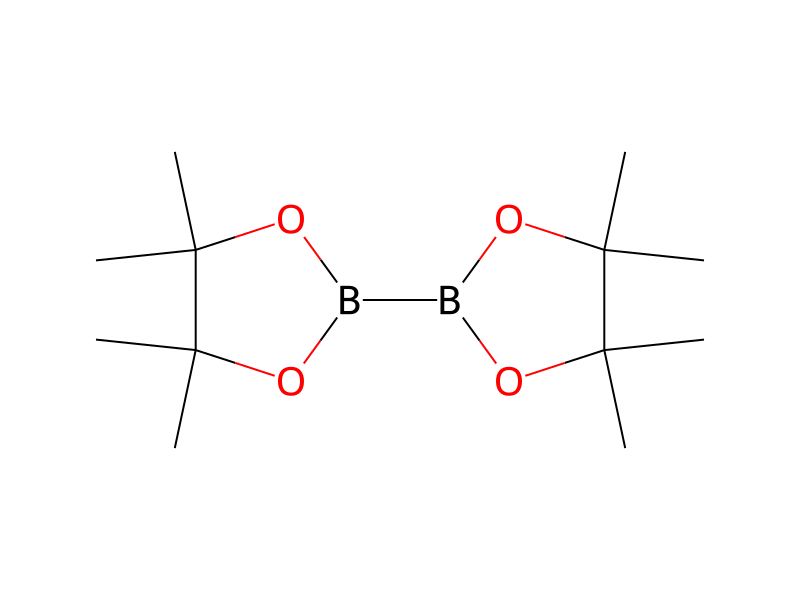
Cl[C:2]1[C:7]([NH:8][S:9]([C:12]2[CH:17]=[CH:16][C:15]([F:18])=[CH:14][CH:13]=2)(=[O:11])=[O:10])=[CH:6][C:5]([C:19]2[N:23]3[CH:24]=[CH:25][CH:26]=[CH:27][C:22]3=[N:21][C:20]=2C)=[CH:4][N:3]=1.B1(B2OC(C)(C)C(C)(C)O2)OC(C)(C)C(C)(C)O1.C([O-])(=O)C.[K+].C1C=CN2C(=NC=C2Br)C=1.C(=O)([O-])[O-].[Na+].[Na+]>O1CCOCC1.O>[F:18][C:15]1[CH:14]=[CH:13][C:12]([S:9]([NH:8][C:7]2[CH:2]=[N:3][CH:4]=[C:5]([C:19]3[N:23]4[CH:24]=[CH:25][CH:26]=[CH:27][C:22]4=[N:21][CH:20]=3)[CH:6]=2)(=[O:11])=[O:10])=[CH:17][CH:16]=1Participants
Reactant 5




Product 1

Reagents, catalysts & solvents 2


Conditions
- Temperature
- 120 °C
Procedure
N-(5-(H-imidazo[1,2-a]pyridin-3-yl)pyridin-3-yl)-4-fluorobenzenesulfonamide. A suspension of N-(5-bromopyridin-3-yl)-4-fluorobenzenesulfonamide (from Example 1) (200 mg, 604 μmol), bis(pinacolato)diboron (169 mg, 664 μmol), 1,1′-bis(diphenylphosphino)ferrocene-palladium(ii)dichloride dichloromethane complex (44.2 mg, 60.4 μmol), potassium acetate (119 mg, 1208 μmol) in 1,4-dioxane (2.5 mL) was sparged with argon for 5 min, appropriately sealed, then heated to 120° C. for 1 h. The reaction vessel was then charged with 3-bromoH-imidazo[1,2-a]pyridine (Alfa Aesar (USA), 149 mg, 755 μmol), sodium carbonate (192 mg; 1.82 mmol) and water (0.5 mL)-sparged with argon-then heated to 100° C. for 3 h. The reaction was then partitioned between 9:1 CHCl3/i-Pr (25 mL) and 5% NaHCO3 (10 mL). The remaining residue in the reaction vessel was dissolved in DMF (3 mL) and added to the separatory funnel. The aqueous layer was then adjusted to a pH of about 8 with 5M HCl, and aqueous further extracted with 9:1 CHCl3/i-Pr (10 mL). The combined organics were dried over MgSO4 then concentrated under reduced pressure. The product was purified on silica (24 g) eluting with 3 to 8% of 2M NH3 in MeOH/CH2Cl2. Product then further purified on reverse phase HPLC eluting with water/acetonitrile (0.1% TFA). The desired fractions were then concentrated under reduced pressure, dissolved in CH3OH/CH2Cl2 (1:1; 5 mL), and stirred with Si-Carbonate (250 mg; 0.2 mmol) for 15 min. The filtrate was isolated by filtration then concentrated to a white solid. MS (ESI positive) m/z: calcd exact mass for C18H13FN4O2S: 368.1; found 369.0. 1H NMR (400 MHz, DMSO-d6) δ ppm 6.97-7.04 (m, 1H) 7.33-7.39 (m, 1H) 7.41-7.49 (m, 2H) 7.70 (d, J=9.00 Hz, 1H) 7.73 (t, J=2.15 Hz, 1H) 7.84 (s, 1H) 7.87-7.93 (m, 2H) 8.31 (d, J=2.35 Hz, 1H) 8.36 (d, J=6.85 Hz, 1H) 8.59 (d, J=1.76 Hz, 1H) 10.79 (br. s., 1H).
Workup
- customwas sparged with argon for 5 min
- customappropriately sealed
- temperaturewith argon-then heated to 100° C. for 3 h
- customThe reaction was then partitioned between 9:1 CHCl3/i-Pr (25 mL) and 5% NaHCO3 (10 mL)
- dissolutionThe remaining residue in the reaction vessel was dissolved in DMF (3 mL)
- additionadded to the separatory funnel
- extractionaqueous further extracted with 9:1 CHCl3/i-Pr (10 mL)
- dry with materialThe combined organics were dried over MgSO4
- concentrationthen concentrated under reduced pressure
- customThe product was purified on silica (24 g)
- washeluting with 3 to 8% of 2M NH3 in MeOH/CH2Cl2
- customProduct then further purified on reverse phase HPLC
- washeluting with water/acetonitrile (0.1% TFA)
- concentrationThe desired fractions were then concentrated under reduced pressure
- dissolutiondissolved in CH3OH/CH2Cl2 (1:1; 5 mL)
- customThe filtrate was isolated by filtration
- concentrationthen concentrated to a white solid
Sources & evidence
- ORD record
- ord-7d23bbf6b97c48df9092806627cbbdc7
- Source dataset
- uspto-grants-2014_05
- Patent number
- US08729074B2
Reaction notes
Loading…