Potassium Carbonate → HCID 59378906, compound
Reaction equation

[F:1][C:2]([F:14])([F:13])[O:3][C:4]1[CH:5]=[C:6](B(O)O)[CH:7]=[CH:8][CH:9]=1.Br[C:16]([C:18]([F:21])([F:20])[F:19])=[CH2:17].C(=O)([O-])[O-].[K+].[K+]>Cl[Pd](Cl)([P](C1C=CC=CC=1)(C1C=CC=CC=1)C1C=CC=CC=1)[P](C1C=CC=CC=1)(C1C=CC=CC=1)C1C=CC=CC=1.C1COCC1.O>[F:1][C:2]([F:14])([F:13])[O:3][C:4]1[CH:9]=[CH:8][CH:7]=[C:6]([C:16]([C:18]([F:21])([F:20])[F:19])=[CH2:17])[CH:5]=1Participants
6
Reactant 3



Product 1

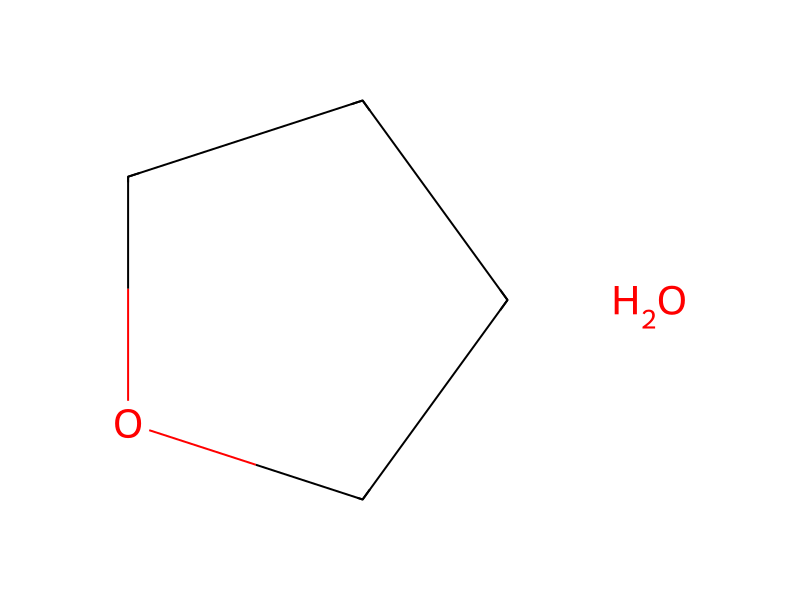
Reagents, catalysts & solvents 2

Conditions
- Temperature
- 60 °C
Procedure
To a solution of 3-Trifluoromethoxy-benzeneboronic acid (2.5 g) in a 2:1 mixture THF/H2O (36 ml) was added 2-Bromo-3,3,3-trifluoro-propene (3.1 ml), potassium carbonate (3.35 g), then Bis(triphenylphosphine)palladium(II) dichloride (169 mg). The reaction mixture was stirred at 60° C. for 7 hours. The solution was allowed to cool to room temperature then filtered on a Celite pad. The filtrate was concentrated in vacuo and the residue was then dissolved with ethyl acetate, extracted with water, dried over magnesium sulfate and concentrated. The residue was purified by chromatography on silica gel to give 1-Trifluoromethoxy-3-(1-trifluoromethyl-vinyl)-benzene (1.23 g). 19F-NMR (CDCl3, 75 MHz): −57.87 ppm and −64.94 ppm.
Workup
- temperatureto cool to room temperature
- filtrationthen filtered on a Celite pad
- concentrationThe filtrate was concentrated in vacuo
- dissolutionthe residue was then dissolved with ethyl acetate
- extractionextracted with water
- dry with materialdried over magnesium sulfate
- concentrationconcentrated
- customThe residue was purified by chromatography on silica gel
Sources & evidence
- ORD record
- ord-09ff8aca0cbf417ea46c210f16230496
- Source dataset
- uspto-grants-2014_05
- Patent number
- US08735362B2
Reaction notes
Loading…