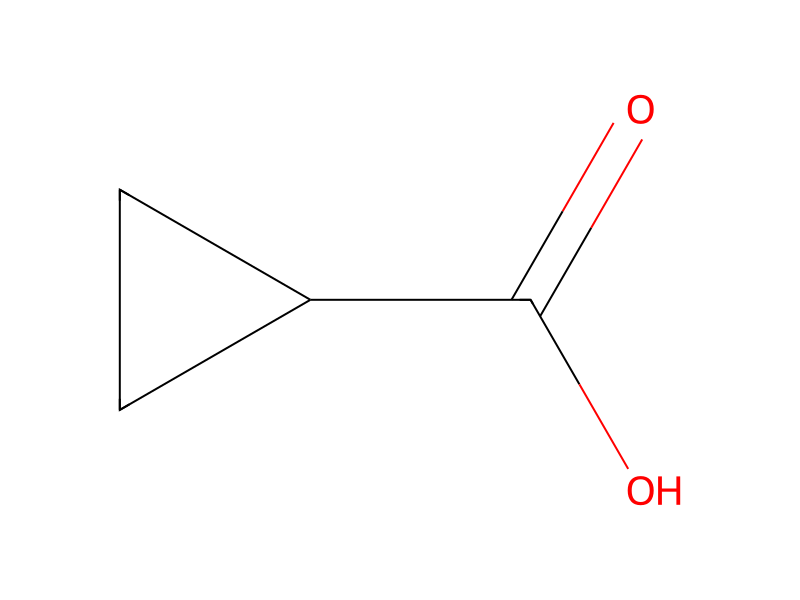
Cyclopropanecarboxylic acid → HCID 178526476, compound
Reaction equation

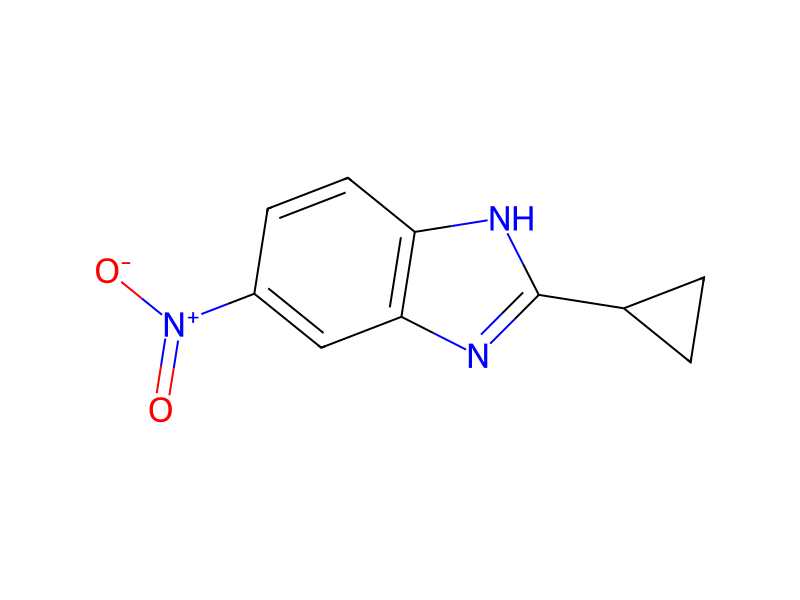
[N+:1]([C:4]1[CH:9]=[CH:8][C:7]([NH2:10])=[C:6]([NH2:11])[CH:5]=1)([O-:3])=[O:2].[CH:12]1([C:15](O)=O)[CH2:14][CH2:13]1>>[CH:12]1([C:15]2[NH:10][C:7]3[CH:8]=[CH:9][C:4]([N+:1]([O-:3])=[O:2])=[CH:5][C:6]=3[N:11]=2)[CH2:14][CH2:13]1Participants
3

Procedure
By analogy with a described method (WO 96/04270), a solution of 5 g (32.65 mmol) of 4-nitro-1,2-phenylenediamine in 77 ml (0.979 mol) of cyclopropanecarboxylic acid is stirred at reflux for 14 hours. The reaction mixture is then concentrated under reduced pressure and taken up in 150 ml of ethyl acetate and 100 ml of sodium hydrogen carbonate. The organic phase is washed with 100 ml of water and then with 50 ml of saturated sodium chloride solution, dried over magnesium sulfate and then concentrated under reduced pressure. 6.5 g of a brown oil are obtained, and are used without further purification in the following step.
Workup
- temperatureat reflux for 14 hours
- concentrationThe reaction mixture is then concentrated under reduced pressure
- washThe organic phase is washed with 100 ml of water
- dry with materialwith 50 ml of saturated sodium chloride solution, dried over magnesium sulfate
- concentrationconcentrated under reduced pressure
Sources & evidence
- ORD record
- ord-19535691aa394ce7a2d08ec3d2113832
- Source dataset
- uspto-grants-2014_05
- Patent number
- US08735432B2
Reaction notes
Loading…