Diisopropylethylamine → HCID 15616400, compound
Reaction equation

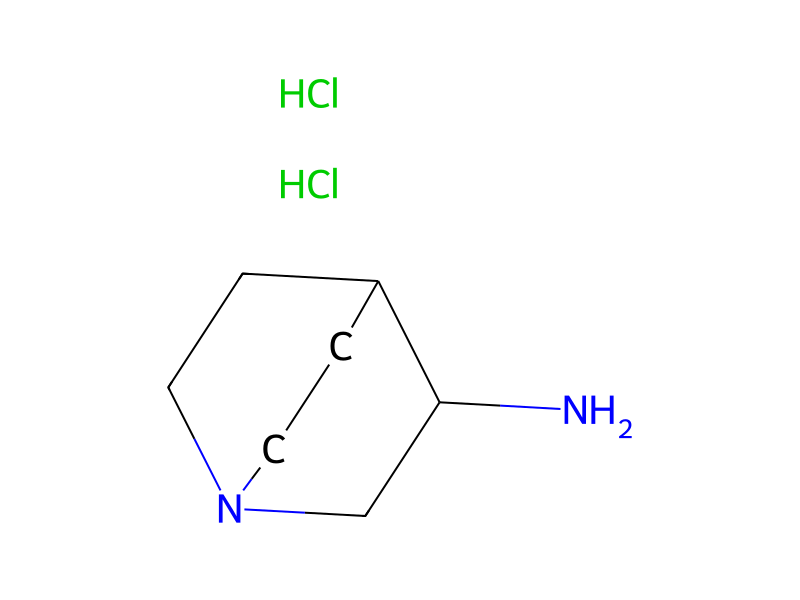
Cl.Cl.[NH2:3][CH:4]1[CH:9]2[CH2:10][CH2:11][N:6]([CH2:7][CH2:8]2)[CH2:5]1.[F:12][C:13]([F:27])([F:26])[C:14]1[CH:15]=[C:16]([CH:23]=[CH:24][CH:25]=1)[C:17]([NH:19][C:20](N)=[O:21])=[O:18].C(N(C(C)C)CC)(C)C>N1C=CC=CC=1>[N:6]12[CH2:11][CH2:10][CH:9]([CH2:8][CH2:7]1)[CH:4]([NH:3][C:20]([NH:19][C:17](=[O:18])[C:16]1[CH:23]=[CH:24][CH:25]=[C:14]([C:13]([F:12])([F:26])[F:27])[CH:15]=1)=[O:21])[CH2:5]2Participants
5
Reactant 3


Product 1

Reagents, catalysts & solvents 1

Procedure
The above compound was prepared from 3-amino quinuclidine dihydrochloride (1.0 g, 5 mmol), 3-trifluoromethylbenzoylurea (1.16 g, 5 mmol) and diisopropylethylamine (1.29 g, 10 mmol) in pyridine (20 ml), by refluxing under nitrogen overnight. The solvent was evaporated and the residue worked-up as in Example 1. The product (1.18 g) was converted to oxalate salt, mp 197°-200° C.
Workup
- temperatureby refluxing under nitrogen overnight
- customThe solvent was evaporated
Sources & evidence
- ORD record
- ord-0f54e8b6c15b444a90f356e3bb12346d
- Source dataset
- uspto-grants-1992_04
- Patent number
- US05106843
Reaction notes
Loading…