2-Naphthol → 2-Acetyl-6-methoxynaphthalene
Reaction equation

C1C2C(=CC=CC=2)C=CC=1O.[Cl-].[Al+3].[Cl-].[Cl-].[C:16]([C:19]1[CH:28]=[CH:27][C:26]2[C:21](=[CH:22][CH:23]=[C:24]([O:30][CH3:31])[C:25]=2Br)[CH:20]=1)(=[O:18])[CH3:17].BrC1C2C(=CC=CC=2)C=CC=1OC>>[C:16]([C:19]1[CH:28]=[CH:27][C:26]2[C:21](=[CH:22][CH:23]=[C:24]([O:30][CH3:31])[CH:25]=2)[CH:20]=1)(=[O:18])[CH3:17]Participants
5




Procedure
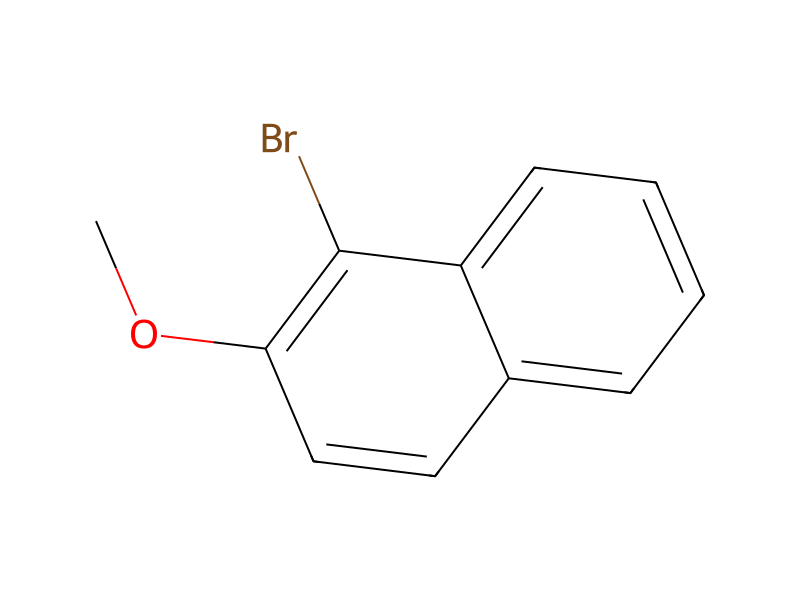
42 Ml of β-naphthol and 16.2 g of anhydrous aluminum chloride are added to the solution of 2-acetyl-5-bromo-6-methoxynaphthalene obtained as in example 1a), while keeping the temperature at -10° C. The reaction mixture is kept for 48 hours under stirring at room temperature and then it is worked as in example 1 with the only difference that the product is crystallized by isopropyl alcohol. 19 Grams of product are obtained with a yield equal to 38.7% calculated on the basis of the starting material 1-bromo-2-methoxynaphthalene.
Workup
- customobtained as in example 1a),
- customat -10° C
- customis crystallized by isopropyl alcohol
- custom19 Grams of product are obtained with a yield equal to 38.7%
Sources & evidence
- ORD record
- ord-9148b56c102046959c02720002e6bd13
- Source dataset
- uspto-grants-1992_04
- Patent number
- US05107013
Reaction notes
Loading…