Tetrahydrofuran → HCID 11436230, compound
Reaction equation

O1CCCC1.[AlH4-].[Li+].[C:8]1([CH2:14][N:15]2[CH2:20][CH2:19][CH:18]([CH2:21][CH2:22][C:23](OCC)=[O:24])[CH2:17][CH2:16]2)[CH:13]=[CH:12][CH:11]=[CH:10][CH:9]=1.[OH-].[Na+]>O>[C:8]1([CH2:14][N:15]2[CH2:20][CH2:19][CH:18]([CH2:21][CH2:22][CH2:23][OH:24])[CH2:17][CH2:16]2)[CH:9]=[CH:10][CH:11]=[CH:12][CH:13]=1Participants
6





Procedure
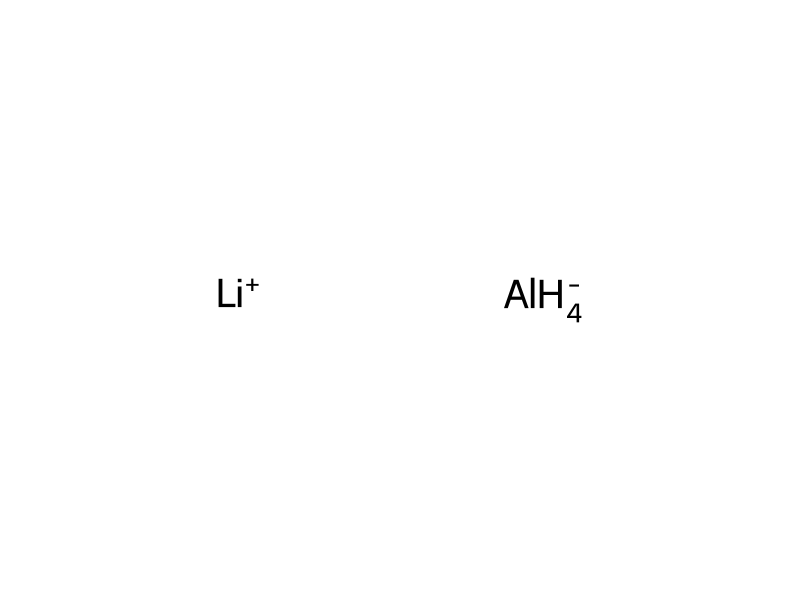
270 Parts of tetrahydrofuran were added carefully to 10 parts of lithium tetrahydroaluminate. A solution of 66 parts of ethyl 1-(phenylmethyl)-4-piperidinepropanoate in 180 parts of tetrahydrofuran was added dropwise to the thus obtained mixture (exothermic reaction, the temperature rose to about 45° C.). The whole was stirred overnight at reflux temperature. The mixture was cooled in an ice salt bath and decomposed at 0° C. with successively 10.5 parts of water, 7.8 parts of a sodium hydroxide solution 20% and 33.8 parts of water. The mixture was filtered over diatomaceous earth and the filtrate was evaporated, yielding 56 parts (100% of 1-(phenylmethyl)-4-piperidinepropanol as a residue (int. 40).
Workup
- customexothermic reaction
- customrose to about 45° C.
- temperatureat reflux temperature
- temperatureThe mixture was cooled in an ice salt bath
- filtrationThe mixture was filtered over diatomaceous earth
- customthe filtrate was evaporated
Sources & evidence
- ORD record
- ord-86651fae946144908dd87bfeff8e516c
- Source dataset
- uspto-grants-1992_04
- Patent number
- US05106973
Reaction notes
Loading…