Potassium Carbonate → HCID 19813444, compound
Reaction equation

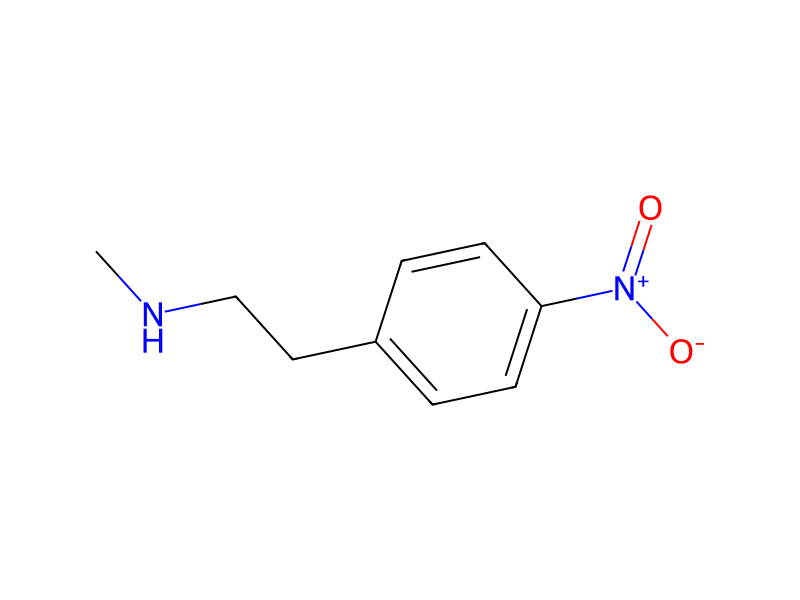
Cl[CH2:2][C:3]1[S:7][C:6]2[CH:8]=[CH:9][C:10]([N+:12]([O-:14])=[O:13])=[CH:11][C:5]=2[CH:4]=1.[CH3:15][NH:16][CH2:17][CH2:18][C:19]1[CH:24]=[CH:23][C:22]([N+:25]([O-:27])=[O:26])=[CH:21][CH:20]=1.C(=O)([O-])[O-].[K+].[K+]>C(#N)C>[CH3:15][N:16]([CH2:17][CH2:18][C:19]1[CH:24]=[CH:23][C:22]([N+:25]([O-:27])=[O:26])=[CH:21][CH:20]=1)[CH2:2][C:3]1[S:7][C:6]2[CH:8]=[CH:9][C:10]([N+:12]([O-:14])=[O:13])=[CH:11][C:5]=2[CH:4]=1Participants
5
Reactant 3


Product 1

Reagents, catalysts & solvents 1

Procedure
A mixture of the product of part (A) above (3.20 g), N-methyl-4-nitrophenethylamine (2.52 g), anhydrous potassium carbonate (4.0 g) and acetonitrile (40 ml) was heated under reflux with stirring for 20 hours and then cooled and filtered. The residue was washed wit acetonitrile, and the combined filtrate and washings were evaporated to give an oil which was chromarographed on silica gel. Elution with dichloromethane first gave impurity followed by pure product. The product-containing fractions were evaporated to give the title compound (4.17 g), m.p. 76°-78° (from isopropanol).
Workup
- temperaturewas heated
- temperatureunder reflux
- temperaturecooled
- filtrationfiltered
- washThe residue was washed wit acetonitrile
- customthe combined filtrate and washings were evaporated
- customto give an oil which
- washElution with dichloromethane first gave impurity
- customThe product-containing fractions were evaporated
Sources & evidence
- ORD record
- ord-ca0330d59e734aefaa0f924b149c36e1
- Source dataset
- uspto-grants-1990_09
- Patent number
- US04956382
Reaction notes
Loading…