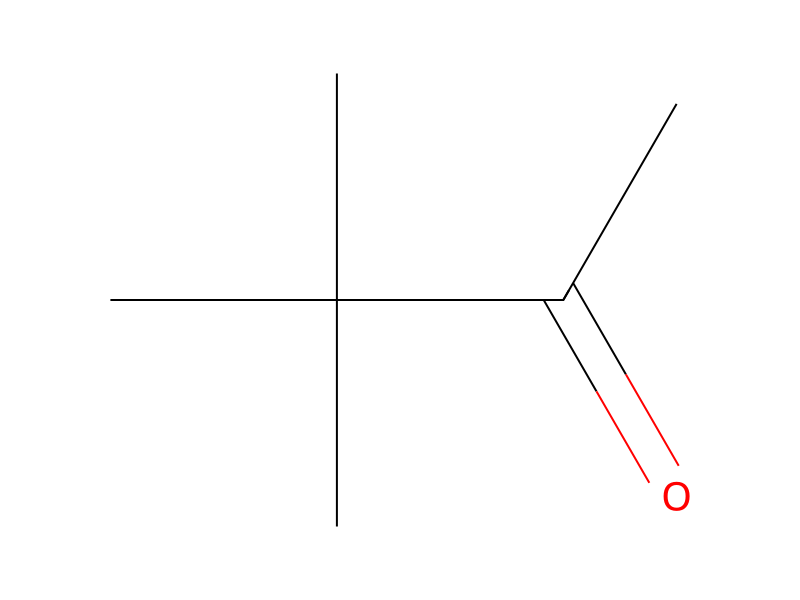
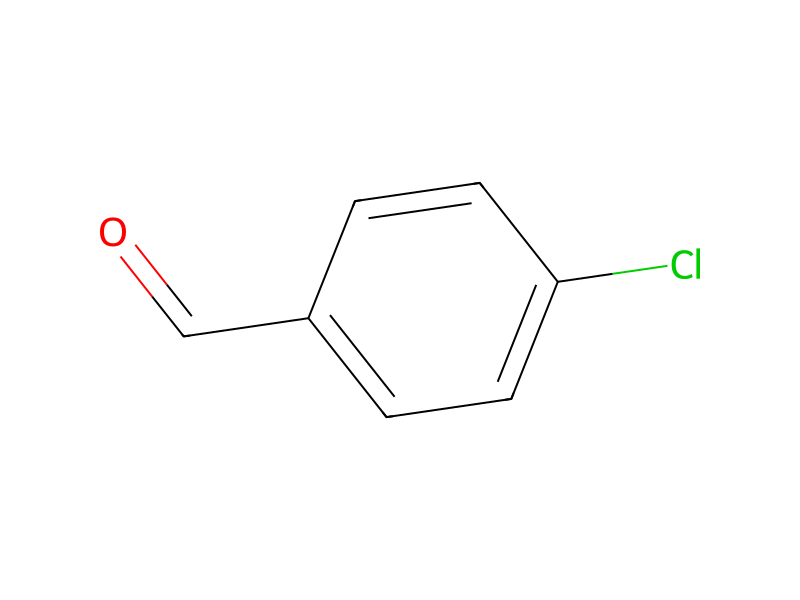
Pinacolone → 5-(4-Chlorophenyl)-2,2-dimethylpent-4-en-3-one
Reaction equation

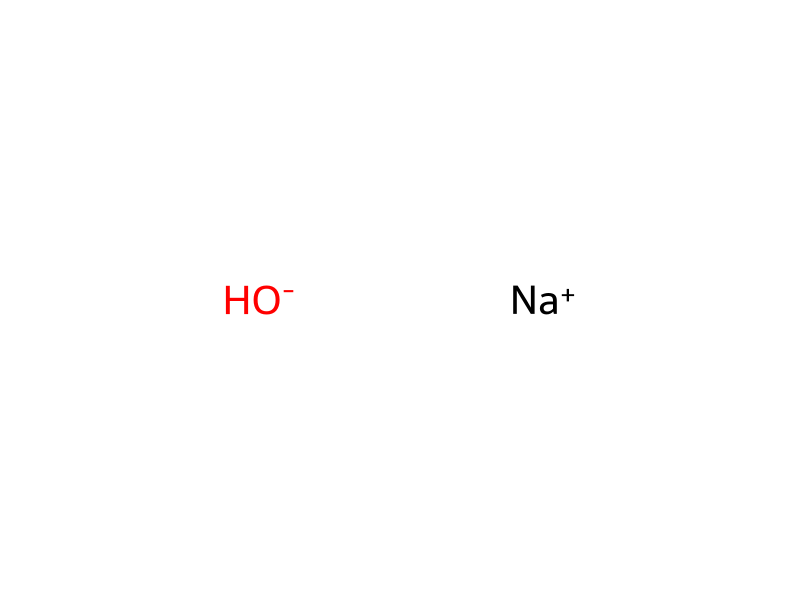
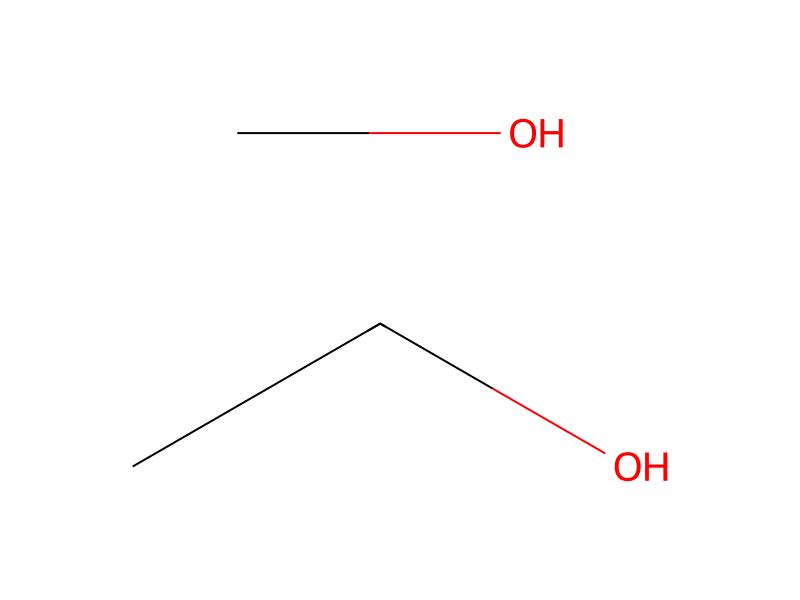
[Cl:1][C:2]1[CH:9]=[CH:8][C:5]([CH:6]=O)=[CH:4][CH:3]=1.[CH3:10][C:11](=[O:16])[C:12]([CH3:15])([CH3:14])[CH3:13].[OH-].[Na+]>CO.C(O)C>[CH3:13][C:12]([CH3:15])([CH3:14])[C:11](=[O:16])[CH:10]=[CH:6][C:5]1[CH:8]=[CH:9][C:2]([Cl:1])=[CH:3][CH:4]=1Participants
Reactant 3
Product 1

Reagents, catalysts & solvents 1
Procedure
evaporation. The yield in that procedure is only 59% of crude product. Apart from the poor yield, the complicated aqueous work up is a disadvantage. In DE-OS (German Published Specification) 2,737,489, a procedure is described, according to which p-chlorobenzaldehyde is reacted with pinacolone in the presence of sodium hydroxide in methanol/ethanol at maximum temperatures of up to 25° C. 4,4-Dimethyl-1-(p-chlorophenyl)-1-penten-3-one is formed as a solid, has to be filtered off with suction and washed with further solvent. The required low temperature results in an inhomogeneous, partially solid reaction mixture, which can only be stirred with difficulty. Furthermore, molar amounts of sodium hydroxide have to be used. A further disadvantage is that the portions of the reaction product which remain in the mother liquor have to be isolated in an additional workup step. To hydrogenate the double bond, the pentenone is dissolved in ethyl acetate and reacted with about 26% by weight of Raney nickel and with hydrogen at atmospheric pressure and a reaction time of about 14 1/2 hours. The very large amount of catalyst and the very long reaction time are the crucial disadvantages of this process. In all known procedures, the condensation product of pinacolone and p-chlorobenzaldehyde has to be isolated and purified as a solid and is only then subjected to hydrogenation in a second separate operation.
Workup
- customevaporation
- customThe yield in that procedure
Sources & evidence
- ORD record
- ord-be7f2d601d2c4983a707b00dd5f6a7e9
- Source dataset
- uspto-grants-1990_09
- Patent number
- US04956505
Reaction notes
Loading…