1H-1,2,4-Triazole → HCID 13295576, compound
Reaction equation

[Cl:1][C:2]1[CH:17]=[CH:16][C:5]([O:6][CH2:7][C:8](=[O:15])[CH2:9][N:10]2[CH:14]=[N:13][CH:12]=[N:11]2)=[CH:4][CH:3]=1.[I-].[CH3:19][S+](C)(C)=O.[OH-].[K+].[NH:26]1[CH:30]=[N:29][CH:28]=[N:27]1>C(O)(C)(C)C>[Cl:1][C:2]1[CH:3]=[CH:4][C:5]([O:6][CH2:7][C:8]([OH:15])([CH2:19][N:26]2[CH:30]=[N:29][CH:28]=[N:27]2)[CH2:9][N:10]2[CH:14]=[N:13][CH:12]=[N:11]2)=[CH:16][CH:17]=1Participants
6
Reactant 4


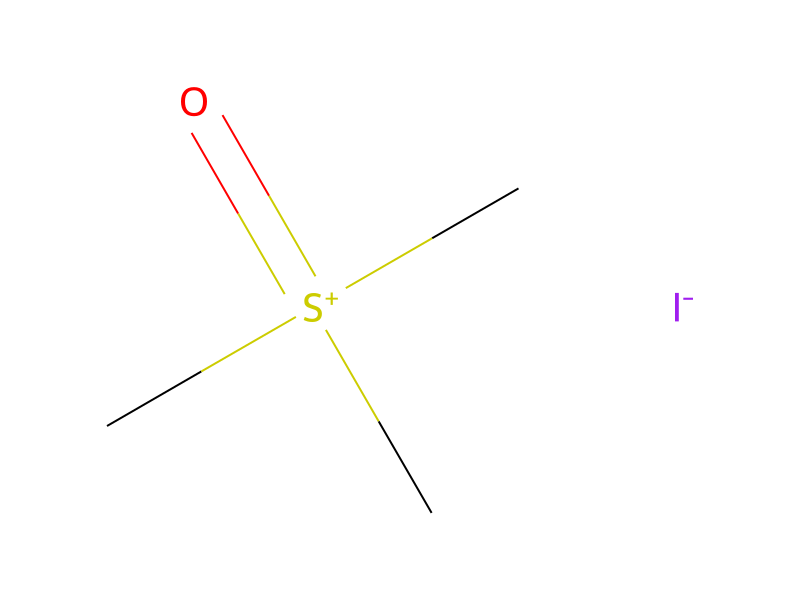

Product 1

Reagents, catalysts & solvents 1

Procedure
A mixture of 1-(4-chlorophenoxy)3-(1,2,4-triazol-1-yl)propan-2-one (0.7g), trimethylsulphoxonium iodide (0.74g), potassium hydroxide (0.38g) and 1,2,4-triazole (0.23g) in tert butyl alcohol (15ml) was heated at 80° for 2.5h, then cooled and partitioned between ethyl acetate and water. The organic phase was separated, washed with water and then brine, dried and evaporated to dryness under reduced pressure. The residue was purified by chromatography on a Lobar silica column, using 2% methanol in chloroform as eluent, to give 2(4-chlorophenoxymethyl)1,3-di(1,2,4-triazol-1-yl)propan-2-ol as a gum. NMR in deuteriochloroform: δ 3.6(2H,s); 4.45(4H,q): 6.75(2H,d); 7.21(2H,d); 7.95(2H,s); 8.2(2H,s).
Workup
- temperaturecooled
- custompartitioned between ethyl acetate and water
- customThe organic phase was separated
- washwashed with water
- dry with materialbrine, dried
- customevaporated to dryness under reduced pressure
- customThe residue was purified by chromatography on a Lobar silica column
Sources & evidence
- ORD record
- ord-8fdbd3b3fb6e4534a200bf093467f7e8
- Source dataset
- uspto-grants-1990_09
- Patent number
- US04957934
Reaction notes
Loading…