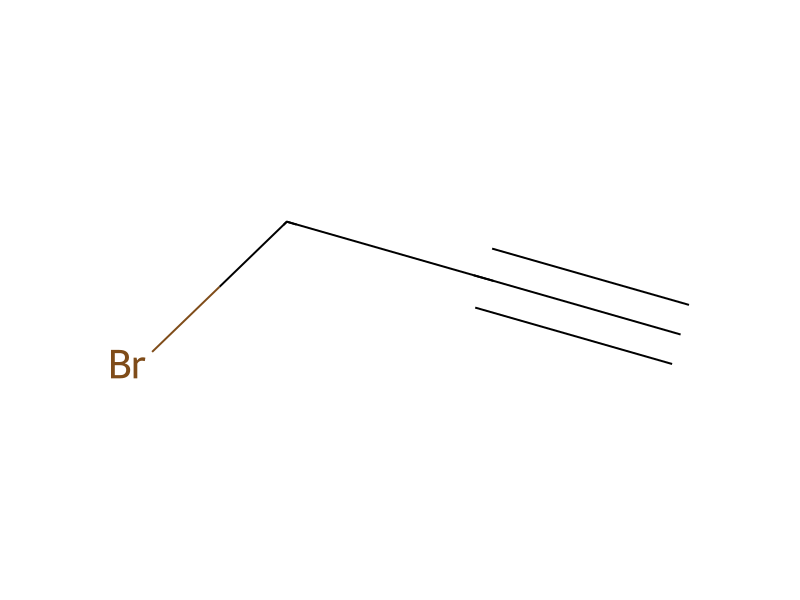
Propargyl bromide → 1,2,3,4-tetrahydro-9-(2-propynyl)-9H-carbazole
Reaction equation

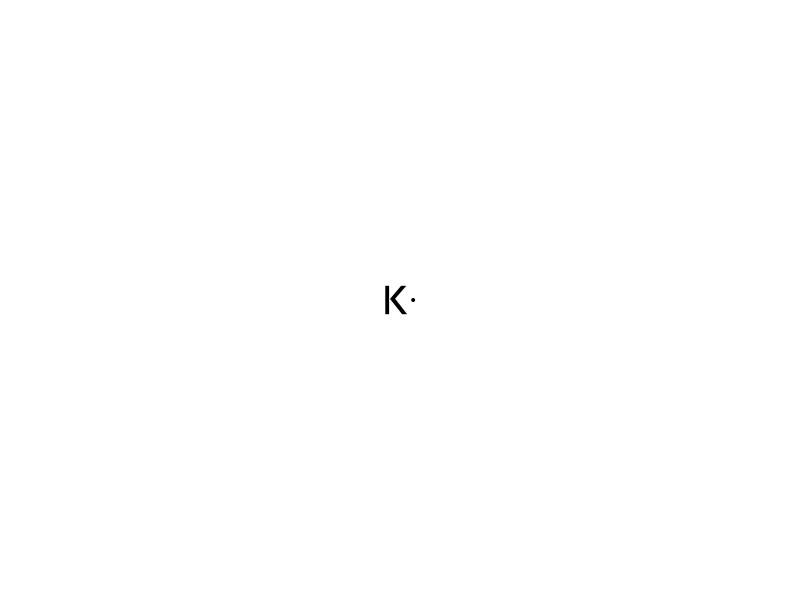
[K].[CH2:2]1[C:14]2[NH:13][C:12]3[C:7](=[CH:8][CH:9]=[CH:10][CH:11]=3)[C:6]=2[CH2:5][CH2:4][CH2:3]1.[CH2:15](Br)[C:16]#[CH:17]>CN(C)C=O.O>[CH2:17]([N:13]1[C:14]2[CH2:2][CH2:3][CH2:4][CH2:5][C:6]=2[C:7]2[C:12]1=[CH:11][CH:10]=[CH:9][CH:8]=2)[C:16]#[CH:15]Participants
Reactant 3

Product 1

Reagents, catalysts & solvents 2


Procedure
Potassium tert.-buroxide, 3.6 g (33 mmol), was added to a solution of 5 g (30 mmol) of 1,2,3,4-tetrahydro-9H-carbazole in 50 ml of dimethylformamide. After stirring for 45 minutes under nitrogen, 3.9 g or 2.9 ml (33 mmol) of propargyl bromide was added and stirring was continued for 30 minutes at room temperature followed by 45 minutes on the steam bath. The cooled reaction mixture was diluted with water and the product was extracted with ether. The extracts were washed with water, dried over sodium sulfate and evaporated. The residue was passed over a plug of silica gel using methylene chloride/hexane 1:1. The fractions containing the least polar product were combined and evaporated. The residue was crystallized from hexane to give colorless crystals of 1,2,3,4-tetrahydro-9-(2-propynyl)-9H-carbazole with m.p. 74°-76°.
Workup
- stirringstirring
- waitwas continued for 30 minutes at room temperature
- waitfollowed by 45 minutes on the steam bath
- customThe cooled reaction mixture
- extractionthe product was extracted with ether
- washThe extracts were washed with water
- dry with materialdried over sodium sulfate
- customevaporated
- additionThe fractions containing the least polar product
- customevaporated
- customThe residue was crystallized from hexane
Sources & evidence
- ORD record
- ord-d62b8789b84146ea95b7e07af1af7f3d
- Source dataset
- uspto-grants-1990_09
- Patent number
- US04959361
Reaction notes
Loading…