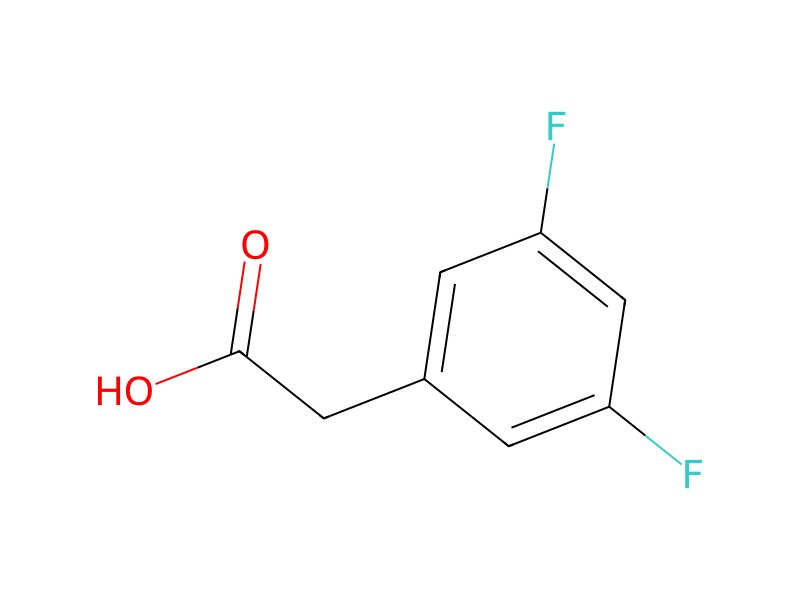
3,5-Difluorophenylacetic acid → HCID 86662121, compound
Reaction equation

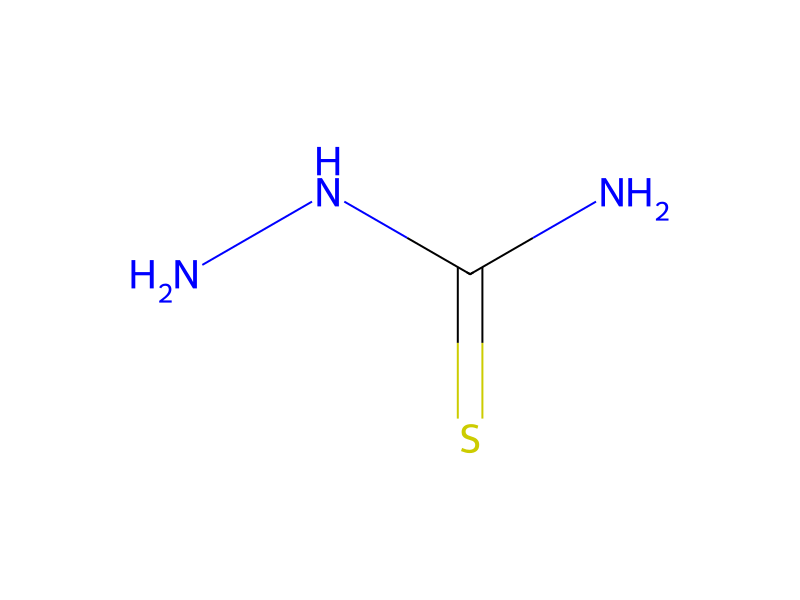
[F:1][C:2]1[CH:3]=[C:4]([CH2:9][C:10]([OH:12])=O)[CH:5]=[C:6]([F:8])[CH:7]=1.[NH2:13][NH:14][C:15]([NH2:17])=[S:16].OC1C2N=NNC=2C=CC=1.Cl.C(N=C=NCCCN(C)C)C>ClCCl>[F:1][C:2]1[CH:3]=[C:4]([CH2:9][C:10]([N:14]([C:15](=[S:16])[NH2:17])[NH2:13])=[O:12])[CH:5]=[C:6]([F:8])[CH:7]=1Participants
6
Reactant 4


Product 1

Reagents, catalysts & solvents 1

Procedure
2.5 g of 3,5-difluorophenylacetic acid (14.52 mmol, 1 eq.) are placed in 70 mL of dichloromethane with stirring. 1.46 g of thiosemicarbazide (15.98 mmol, 1.1 eq.), 2.22 g of hydroxybenzotriazole (14.52 mmol, 1 eq.) and 2.78 g of 1-ethyl-3-(3-dimethylaminopropyl)carbodiimide hydrochloride (14.52 mmol, 1 eq.) are successively added with continued stirring at room temperature. After 18 hours at room temperature, the dichloromethane is evaporated off. The residue is taken up in ethyl acetate and 1N hydrochloric acid. The precipitate is filtered off and dried to give 1.67 g of [(3,5-difluorophenyl)acetyl]hydrazinecarbothioamide.
Workup
- stirringwith continued stirring at room temperature
- customthe dichloromethane is evaporated off
- filtrationThe precipitate is filtered off
- customdried
Sources & evidence
- ORD record
- ord-6e3fb33811ae474493a04d01990f39cc
- Source dataset
- uspto-grants-2013_10
- Patent number
- US08546391B2
Reaction notes
Loading…