Isoquinoline → 1,9-Di(2-Isoquinoliniumyl)Nonane With Dibromide Ions
Reaction equation

[Br:1][CH2:2][CH2:3][CH2:4][CH2:5][CH2:6][CH2:7][CH2:8][CH2:9][CH2:10]Br.[CH:12]1[C:21]2[C:16](=[CH:17][CH:18]=[CH:19][CH:20]=2)[CH:15]=[CH:14][N:13]=1>>[Br-:1].[Br-:1].[CH2:2]([N+:13]1[CH:14]=[CH:15][C:16]2[C:21](=[CH:20][CH:19]=[CH:18][CH:17]=2)[CH:12]=1)[CH2:3][CH2:4][CH2:5][CH2:6][CH2:7][CH2:8][CH2:9][CH2:10][N+:13]1[CH:14]=[CH:15][C:16]2[C:21](=[CH:20][CH:19]=[CH:18][CH:17]=2)[CH:12]=1Participants
3
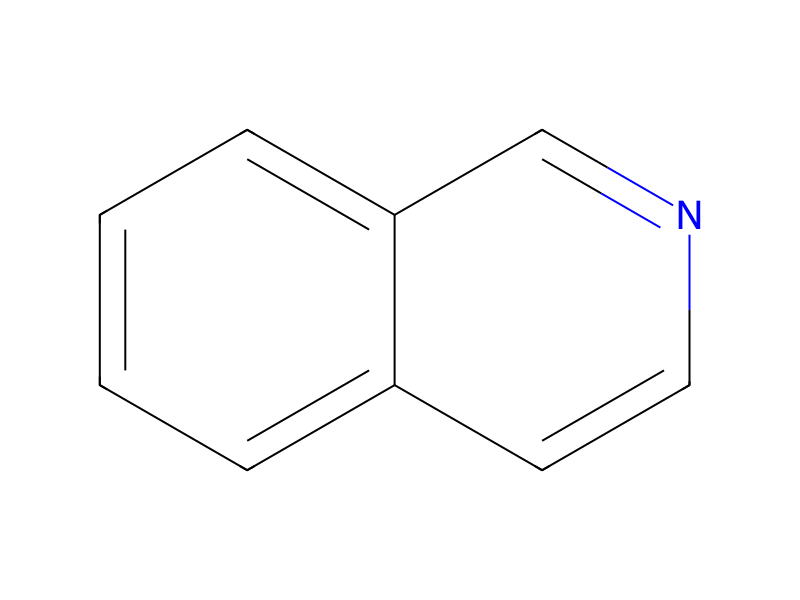


Conditions
- Temperature
- 65 °C
Procedure
1,9-Dibromononane (mmol) was added to a solution (30 mL) of isoquinoline, and the solution heated for 24 hours at 65° C. The resulting precipitate was filtered, and the product washed five times with dry diethyl ether. The resulting purple solid was isolated in a 92% yield. 1H NMR (300 MHz, DMSO-D6) δ 10.17 (1H, d, C1-H), 8.85 (1H, d, C3-H), 8.62 (1H, d, C8-H), 8.49 (1H, d, C4-H), 8.36 (2H, d, C7-H), 8.26 (2H, t, C5-H), 8.08 (1H, t, C6-H), 4.72 (2H, t, C′1-CH2), 2.02 (2H, m, C′2-CH2), 1.78 (1H, m, C′3-CH2), 1.19-1.50 (4H, m, C′3-5-CH2).
Workup
- filtrationThe resulting precipitate was filtered
- washthe product washed five times with dry diethyl ether
- customThe resulting purple solid was isolated in a 92% yield
Sources & evidence
- ORD record
- ord-1592f249dac74603b7f427cfdb36ad27
- Source dataset
- uspto-grants-2013_10
- Patent number
- US08546415B2
Reaction notes
Loading…