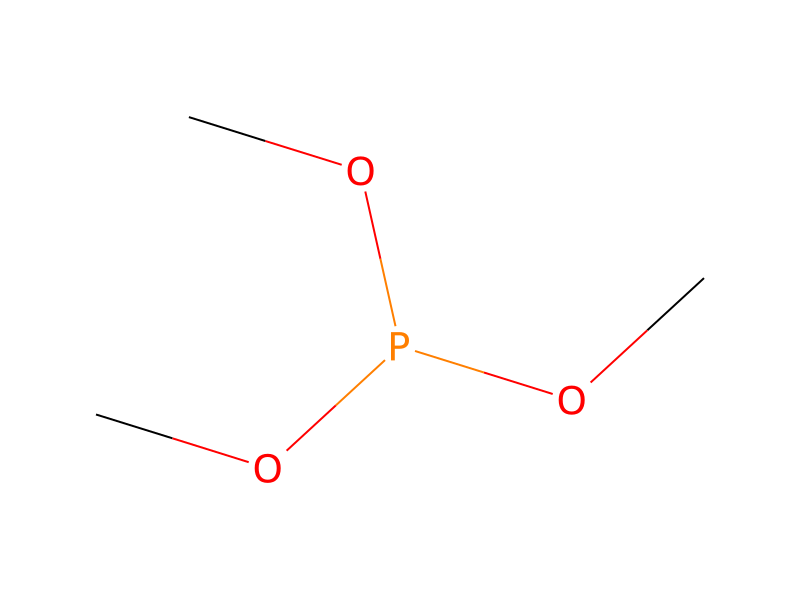
Trimethyl phosphite → Dimethyl (2-chloro-4-morpholinopyrido[3,2-d]pyrimidin-6-yl)methylphosphonate
Reaction equation

Br[CH2:2][C:3]1[CH:4]=[CH:5][C:6]2[N:7]=[C:8]([Cl:19])[N:9]=[C:10]([N:13]3[CH2:18][CH2:17][O:16][CH2:15][CH2:14]3)[C:11]=2[N:12]=1.[P:20]([O:25]C)([O:23][CH3:24])[O:21][CH3:22]>>[Cl:19][C:8]1[N:9]=[C:10]([N:13]2[CH2:18][CH2:17][O:16][CH2:15][CH2:14]2)[C:11]2[N:12]=[C:3]([CH2:2][P:20](=[O:25])([O:23][CH3:24])[O:21][CH3:22])[CH:4]=[CH:5][C:6]=2[N:7]=1Participants
3


Conditions
- Temperature
- 120 °C
Procedure
To 4-(6-(bromomethyl)-2-chloropyrido[3,2-d]pyrimidin-4-yl)morpholine 7 (2 g) was added Trimethyl Phosphite (30 eq) and the reaction was refluxed at 120° C. for 90 minutes. The reaction was cooled and concentrated to dryness under vacuum. To the dried crude was added water, upon which a yellow solid crashed out and was filtered and dried overnight under vacuum to afford 2 g of pure dimethyl (2-chloro-4-morpholinopyrido[3,2-d]pyrimidin-6-yl)methylphosphonate.
Workup
- temperatureThe reaction was cooled
- concentrationconcentrated to dryness under vacuum
- customTo the dried crude
- additionwas added water
- filtrationwas filtered
- customdried overnight under vacuum
Sources & evidence
- ORD record
- ord-27097a99895242a391a6c636b5f3094d
- Source dataset
- uspto-grants-2013_10
- Patent number
- US08563540B2
Reaction notes
Loading…