Dichloromethane → (R)-Phenyl(p-tolyl)methanol
Reaction equation

O1CCOCC1.C1COCC1.[C:12]1([Mg]Br)[CH:17]=[CH:16][CH:15]=[CH:14][CH:13]=1.ClCCl.[C:23]1([CH3:31])[CH:28]=[CH:27][C:26]([CH:29]=[O:30])=[CH:25][CH:24]=1>Cl[Ti](OC(C)C)(OC(C)C)OC(C)C>[CH3:31][C:23]1[CH:28]=[CH:27][C:26]([C@H:29]([OH:30])[C:12]2[CH:17]=[CH:16][CH:15]=[CH:14][CH:13]=2)=[CH:25][CH:24]=1Participants





Procedure
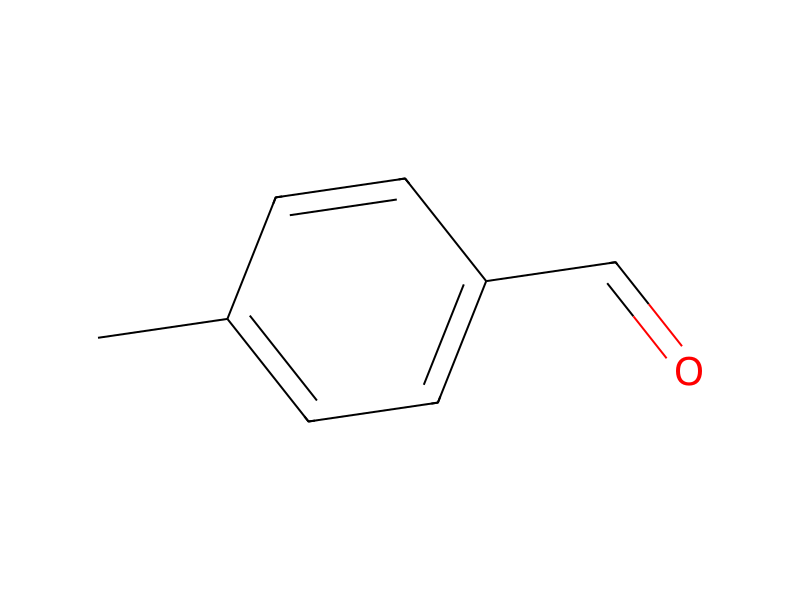
1.0 mL (12 mmol) of anhydrous 1,4-dioxane was added to 0.375 mL (0.375 mmol) of an anhydrous THF solution (1.00 mol/L) of commercial phenylmagnesium bromide, and the contents were stirred for 10 minutes, and then 0.402 mL (0.325 mmol) of an anhydrous dichloromethane solution (0.80 mol/L) of chloro-tri-iso-propoxy titanium prepared in Preparation Example 1 was added thereto, and further stirred for 10 minutes. 0.25 mL (0.0125 mmol) of an anhydrous dichloromethane solution (0.050 mol/L) of (R)—H8-BINOL was added thereto and stirred at room temperature for 30 minutes. The thus-obtained solution containing a white precipitate was added dropwise to 30 mg (0.25 mmol) of a dichloromethane solution (0.5 mL) of p-tolualdehyde using a syringe over a period of 10 minutes, and stirred at room temperature for 1 hour for the reaction. Thereafter, an operation was carried out in the same manner as in Example 1 to obtain (R)-4-methylbenzhydrol. The conversion rate of the raw material was 80%, while the enantiomeric excess of the product was 94% ee. The amount of dioxane used during the reaction was 32 equivalents (64 equivalents in terms of the ether oxygen equivalent) relative to magnesium.
Workup
- additionwas added
- stirringfurther stirred for 10 minutes
- stirringstirred at room temperature for 30 minutes
- additionThe thus-obtained solution containing a white precipitate
- stirringstirred at room temperature for 1 hour for the reaction
Sources & evidence
- ORD record
- ord-a0d6d90fcf894a76bb60c844fd64a734
- Source dataset
- uspto-grants-2013_10
- Patent number
- US08563786B2
Reaction notes
Loading…